Today, after sleeping in and enjoying a very nice breakfast, we arranged a half-day tour of the neighborhood of Mashamba in Elim, and of Elim itself, the town nearest to where we are staying. Elim sits in the Vhembe District of Limpopo, in the heart of Venda country, and has long been known as a mission settlement — founded by Swiss missionaries in the 19th century — which gives the area its distinctive character.
This is the homeland of the Venda people (the VhaVenda), one of South Africa’s smaller cultural groups, who speak Tshivenda and are known for a rich tradition of art, music, and folklore. Their culture carries strong influences from both the north, across the Limpopo River, and the surrounding peoples, and they hold a deep reverence for sacred sites — Lake Fundudzi and the Thathe Vondo forest among them — as well as for water spirits and the python, a central figure in the famous domba, or python dance. With Mashudu as our guide and Takalani as our driver, we set out to visit several spots, including the local street market.
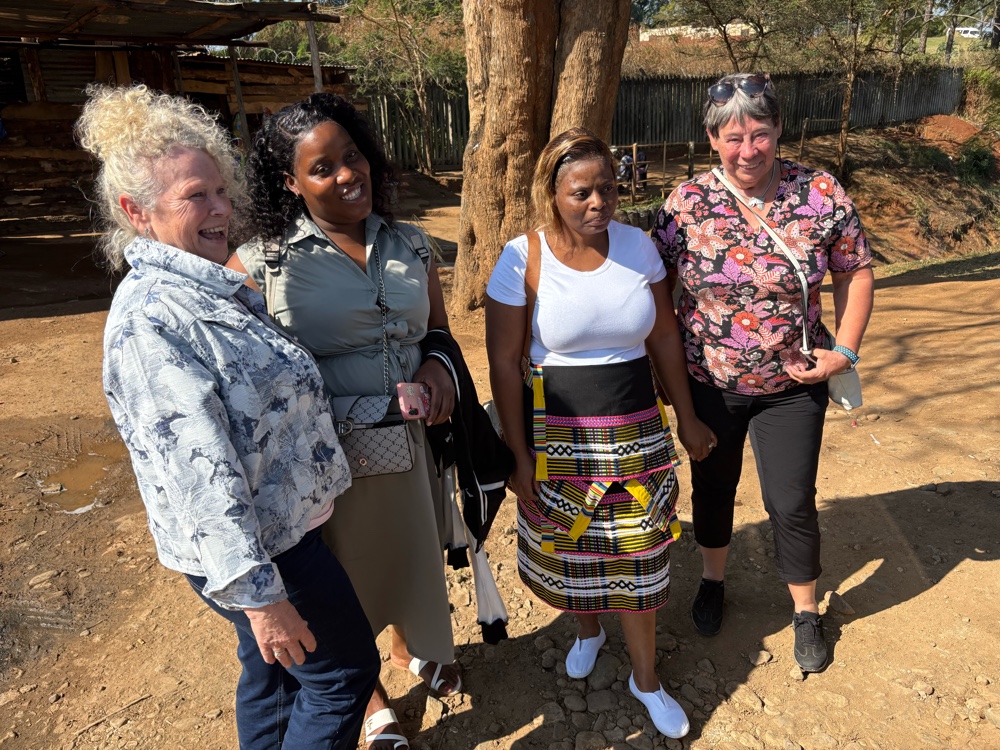 |
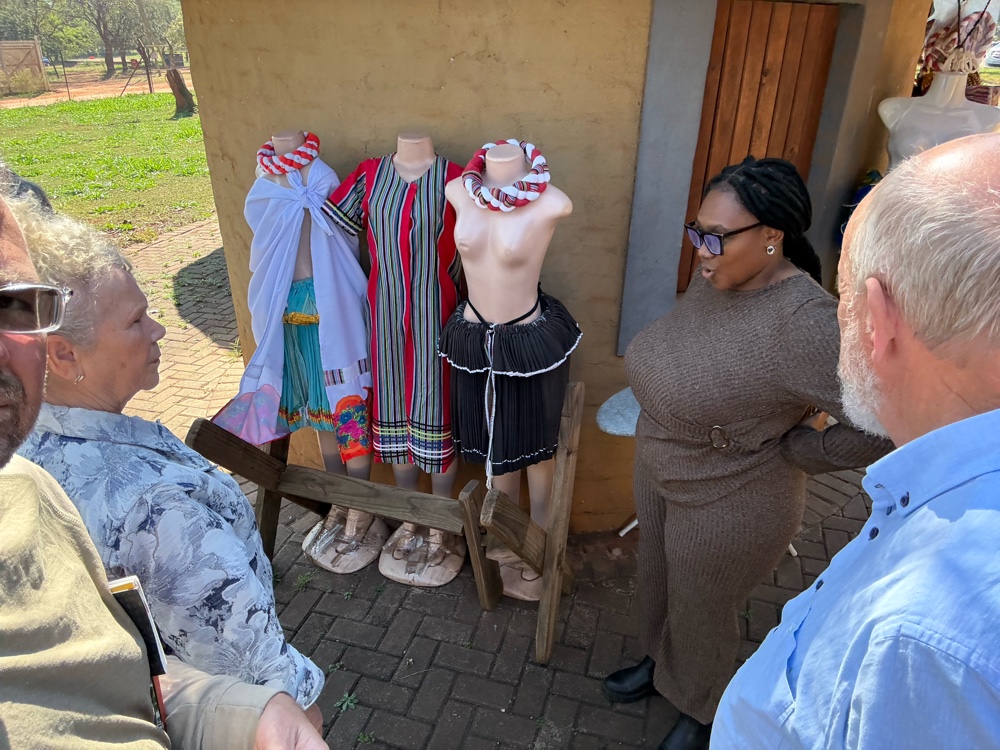
| As we were driving through town, we came across these two ladies, one of whom is a relative of our guide. So she called them over and we got out to take some pictures because the woman in the center is wearing a traditional Venda skirt. |
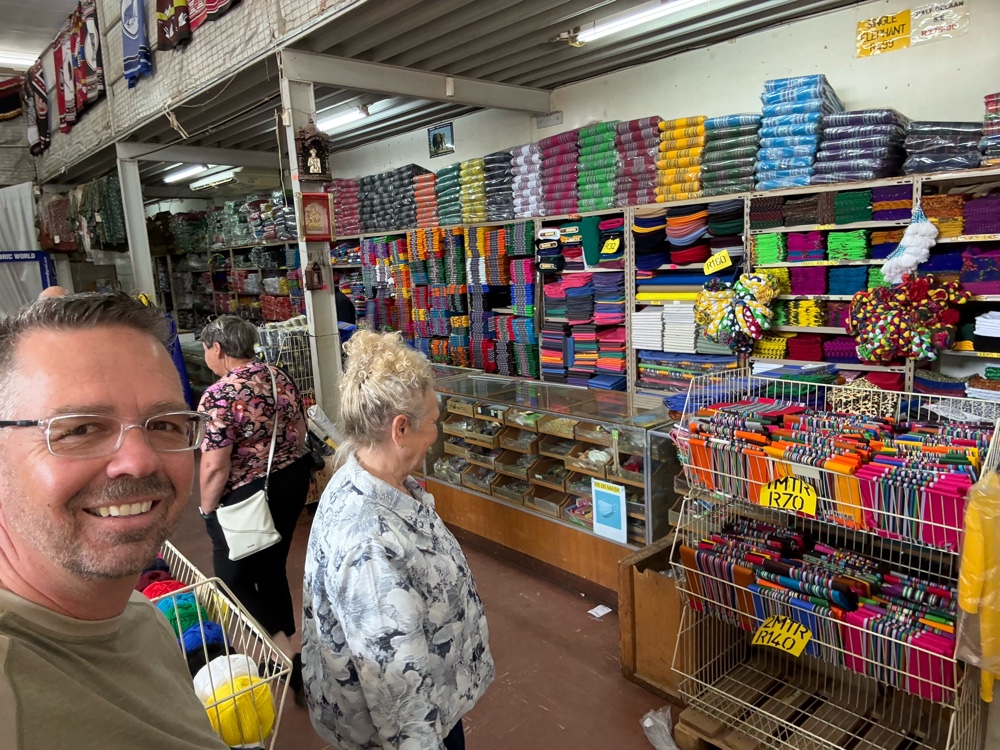
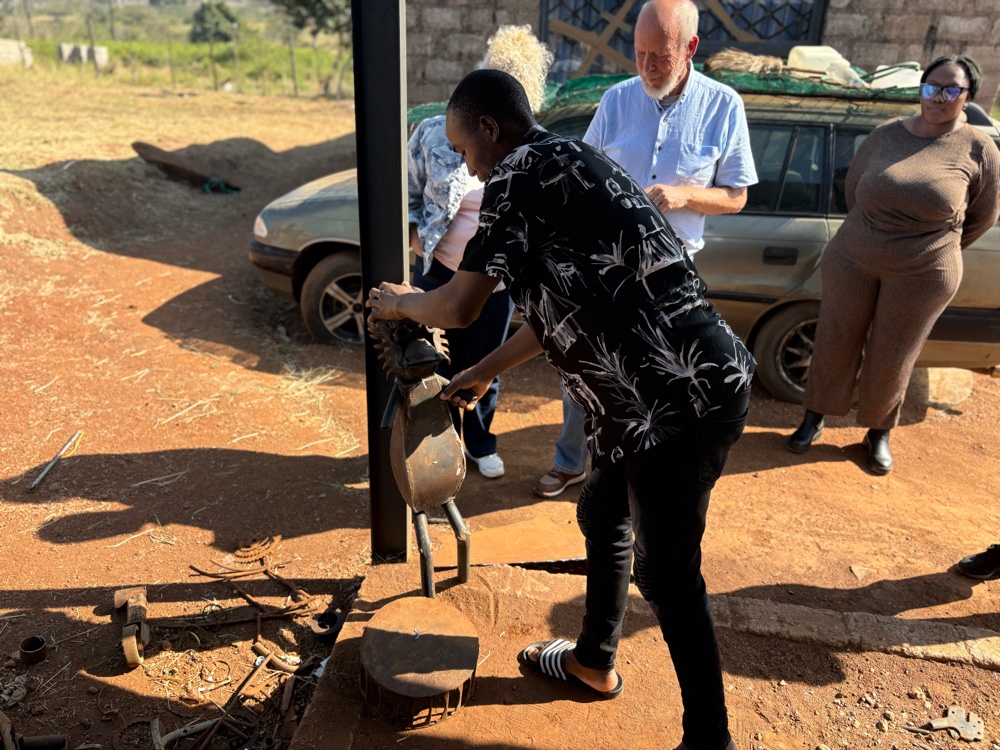
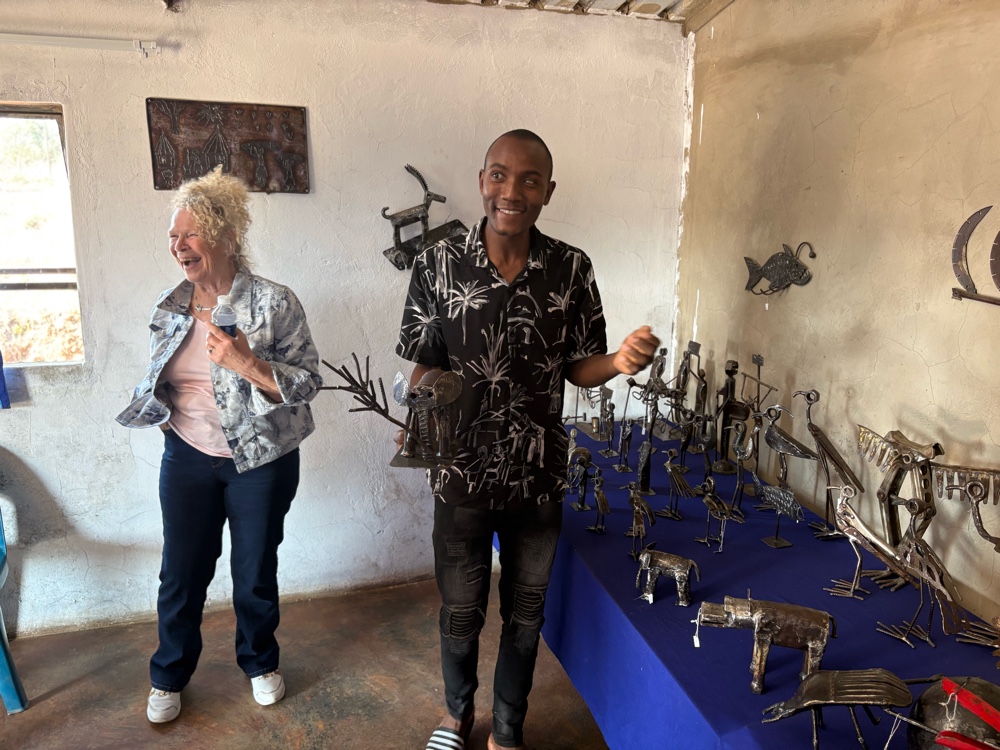
Our first stop was a fabric market where locals shop when they want to make traditional clothing. The bright, patterned cloth here is part of a strong Venda textile tradition, and it was wonderful to see the colors laid out side by side. From there we went on to visit two local artisans: one who creates sculptures out of scrap metal, and another who does wood carving — the latter a craft the Venda people are especially celebrated for.
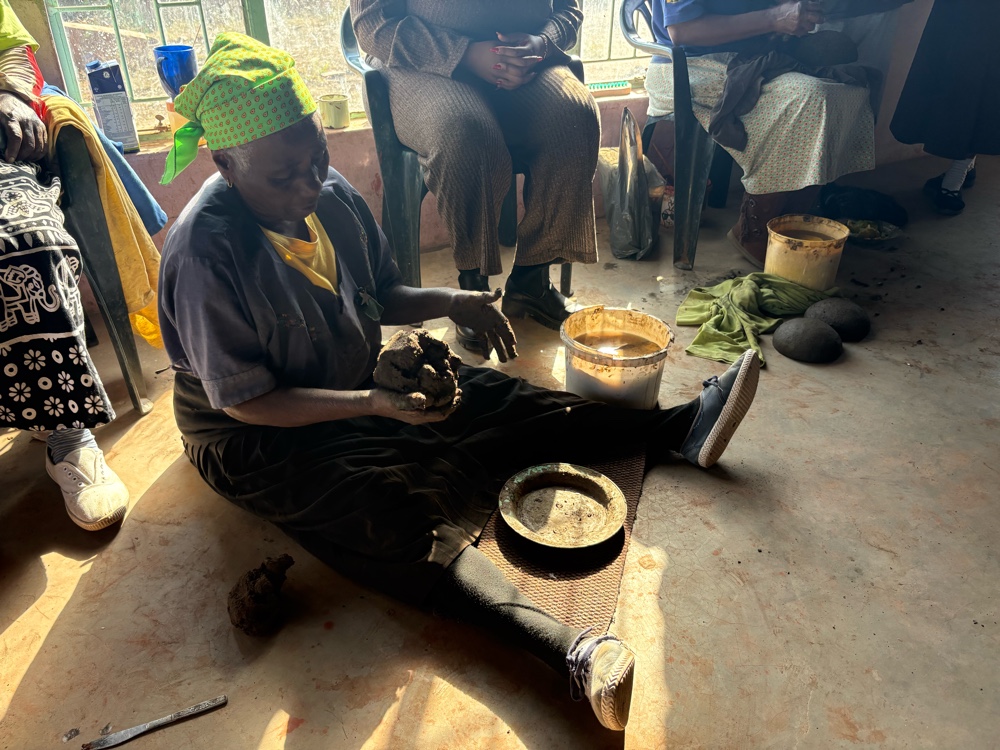
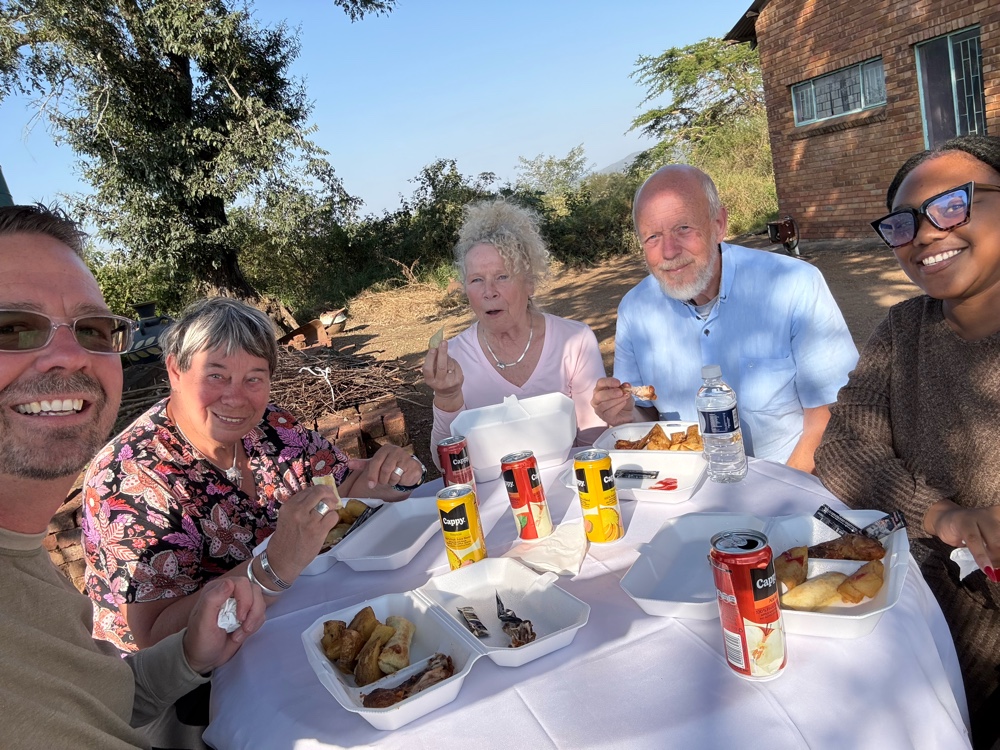
After that, we headed to a local ceramic cooperative, where the women gave us a demonstration of how they shape pottery entirely by hand, using clay sourced right out their back door. This region has a deep pottery heritage, and watching raw earth become a finished vessel was a real highlight. We enjoyed a picnic lunch right outside the pottery shop afterward.
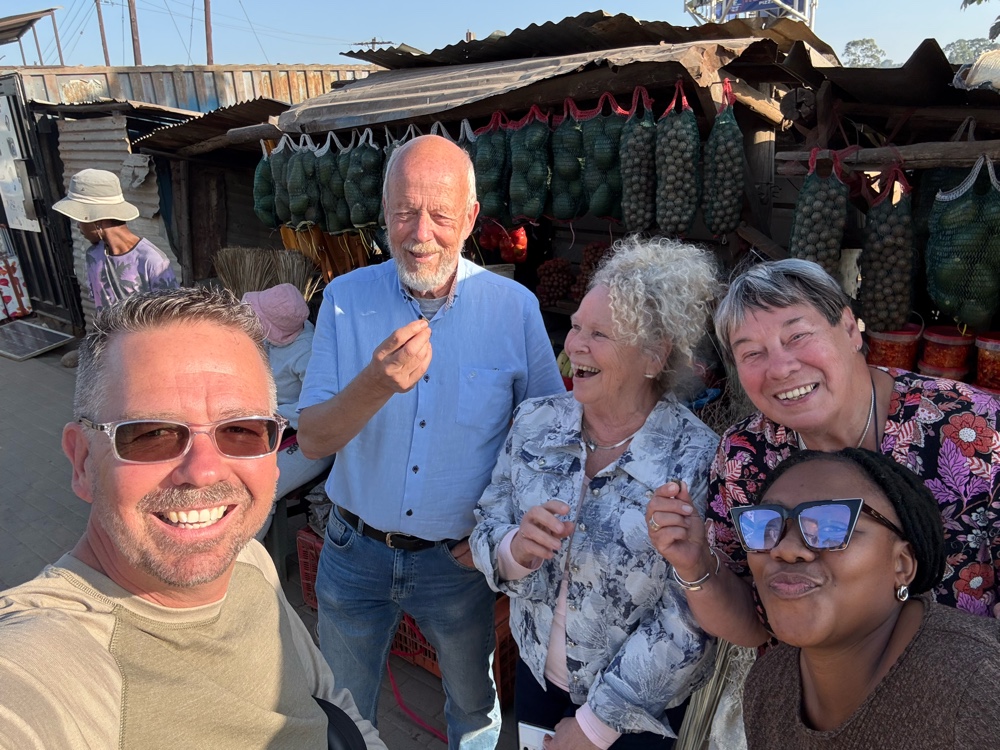
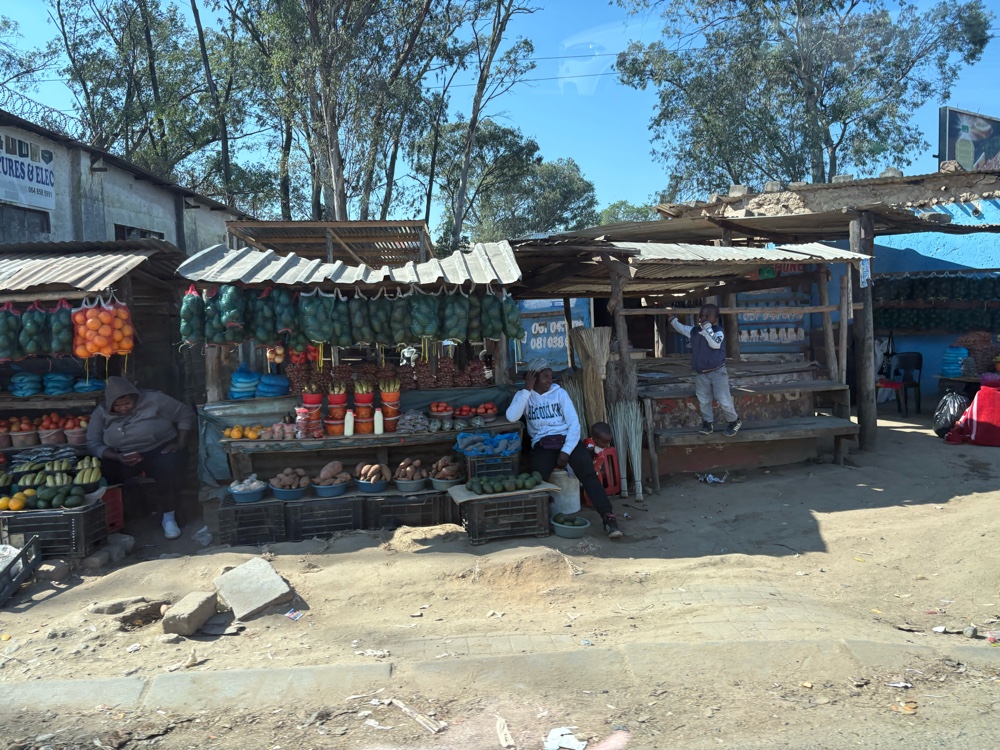
Our last stop was a short walk through the street markets in Elim, where we had the chance to sample the infamous mopane worms — the dried caterpillars of the emperor moth. These are a beloved regional delicacy, rich in protein and harvested from the mopane trees that give them their name. To be quite honest, they really weren’t that bad. If I had to eat them to survive, I could do it.
We got back to our lodge around 4:30 in the afternoon, rested a bit, and planned to have dinner at 7 p.m.
Notes about the city:
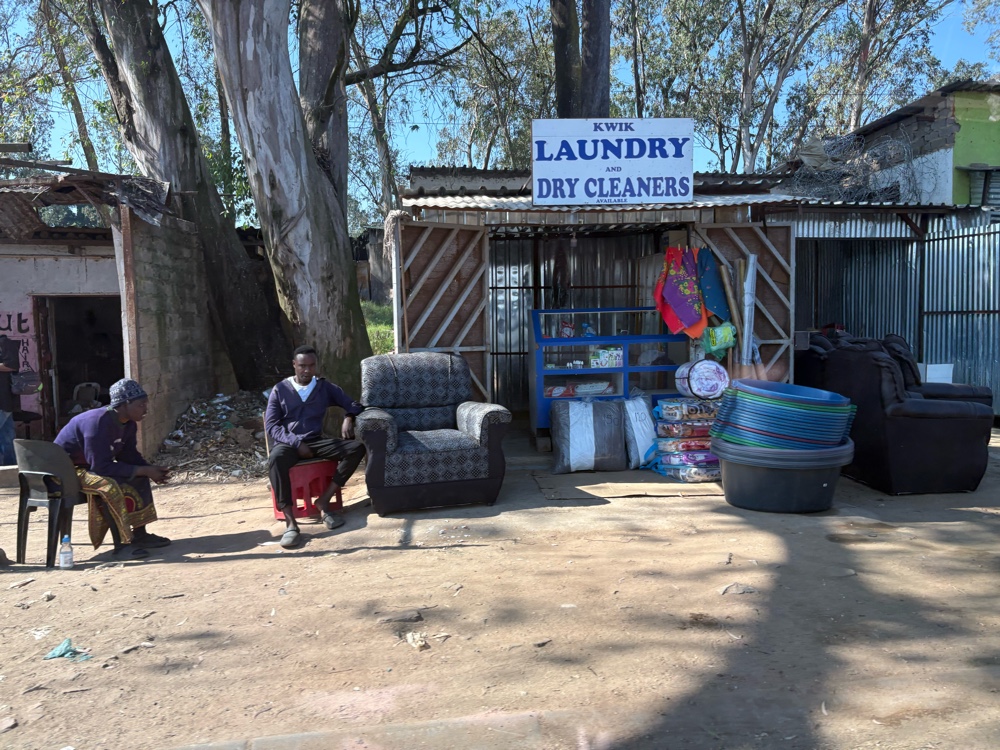
Walking through Elim, you get a real sense of a place living largely outside the polished tourist circuit. The population is almost entirely Black African — predominantly Venda, with Tsonga residents as well — alongside a long-established Indian-South African community whose shops and traders have been part of the town’s fabric for generations. We saw no other foreign tourists and very few outsiders of any kind; we were clearly a novelty. The infrastructure tells its own story: unpaved side streets, informal stalls, modest homes, and the everyday hustle of people getting by. It has the unmistakable feel of the developing world — not in any bleak sense, but in its rawness and authenticity. This is daily life, unstaged and unhurried, and there’s something genuinely refreshing about witnessing it firsthand.




Comments
Post a Comment