 |
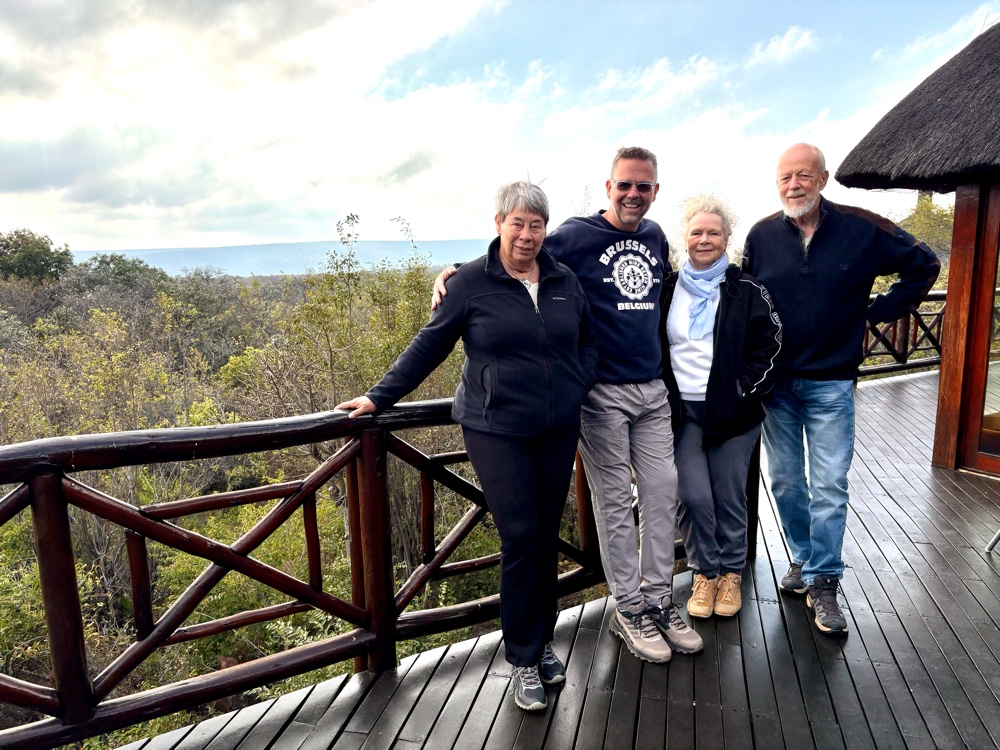
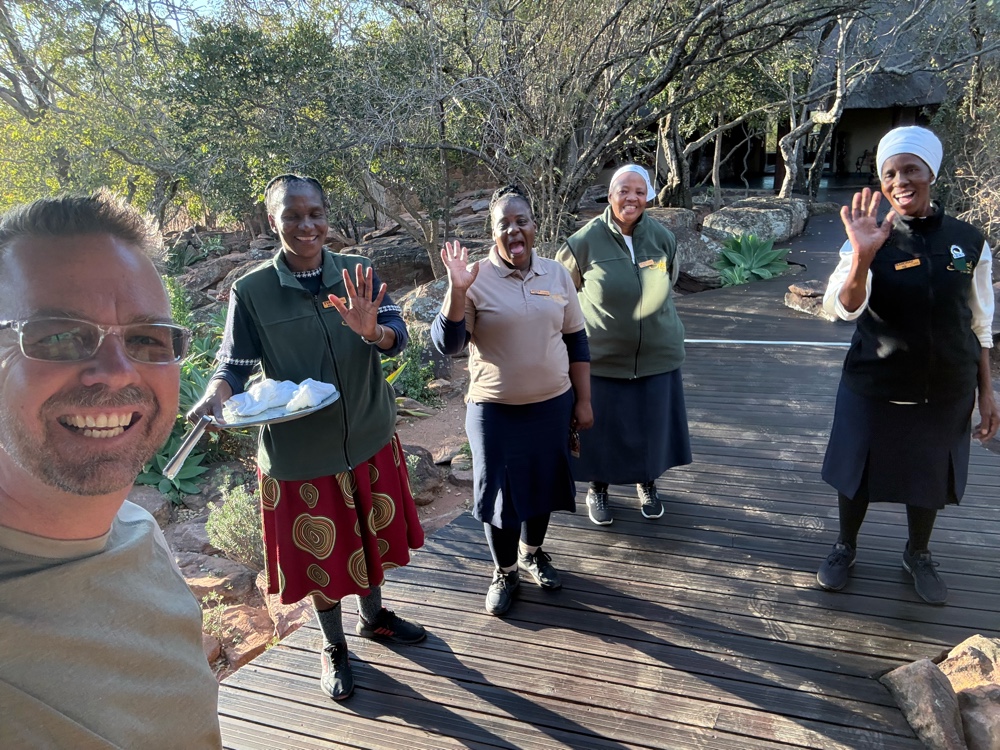
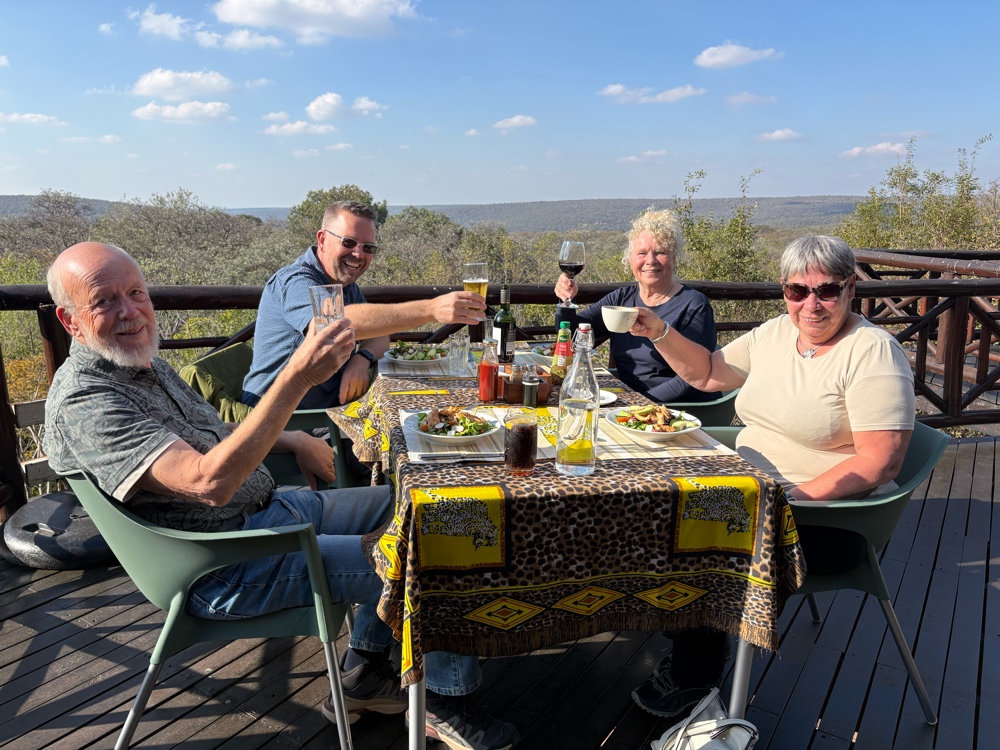
| The deck at Sekala |
The lodge where we’ll be staying for the next few days sits within Welgevonden, a 75,000-acre private reserve. There are quite a few lodges here, but at Sekala it feels like we’re miles from nowhere.
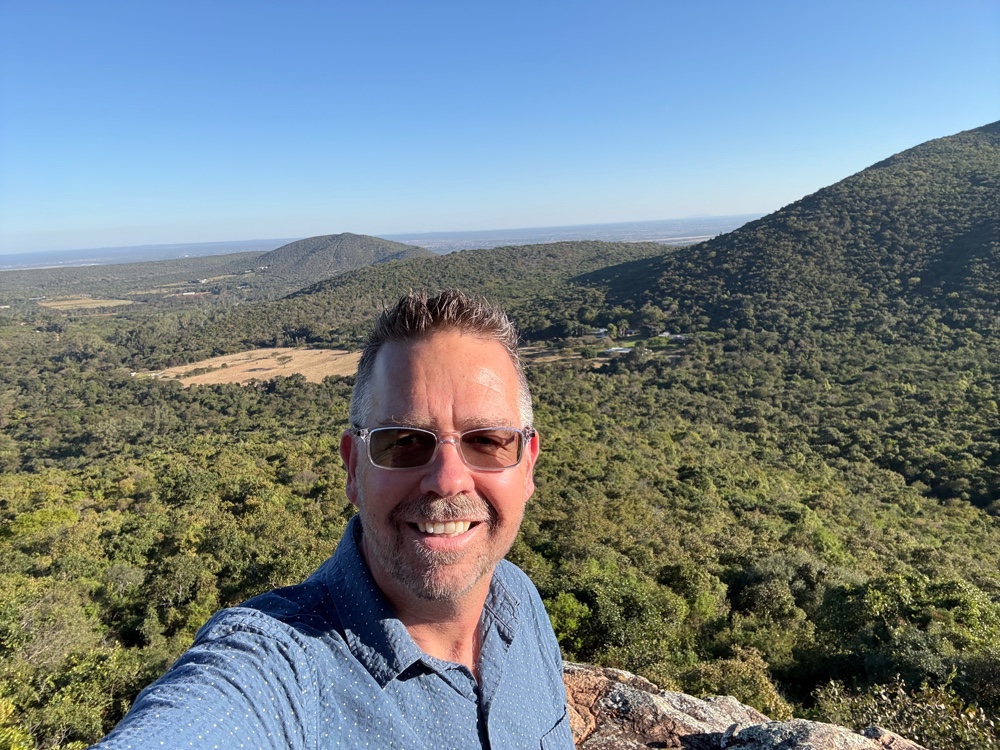
The terrain is quite different from Madikwe. Welgevonden is set among rolling hills, low mountains, and the valley plains between them. In some ways it reminds me of the foothills of the Sierra Nevada in summertime: dry, with scrub brush and low trees. The types of trees and vegetation are different, of course, but it has a similar feel to areas like Yokuts (formerly Squaw) Valley.
Sekala accommodates a maximum of 10 guests at a time, so it’s very small and intimate. There appear to be about eight staff, and they all greeted us warmly when we arrived—a real delight. They’re the ones who sang and danced for us at dinner last night. The lodge and the accommodations are beautiful.
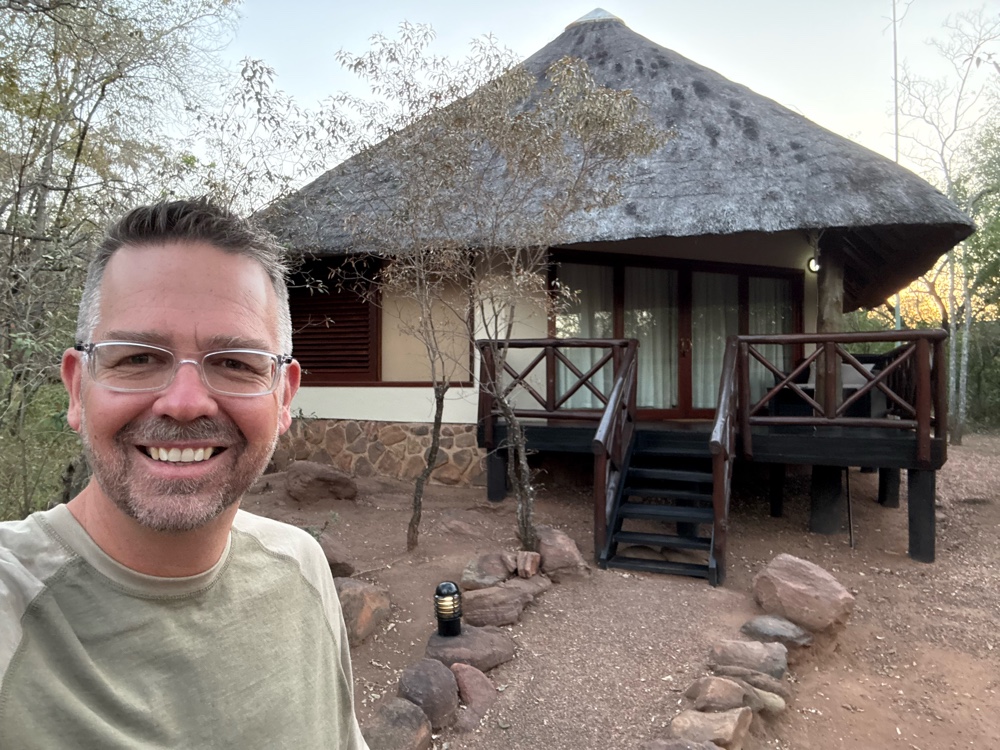 |
| My room. |
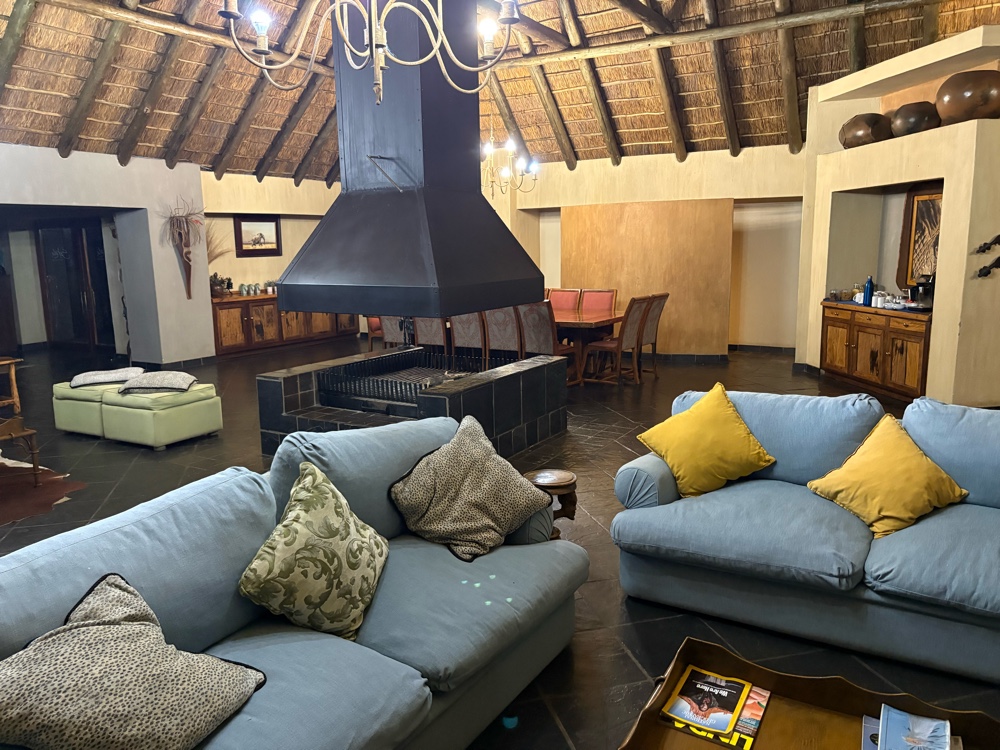 |
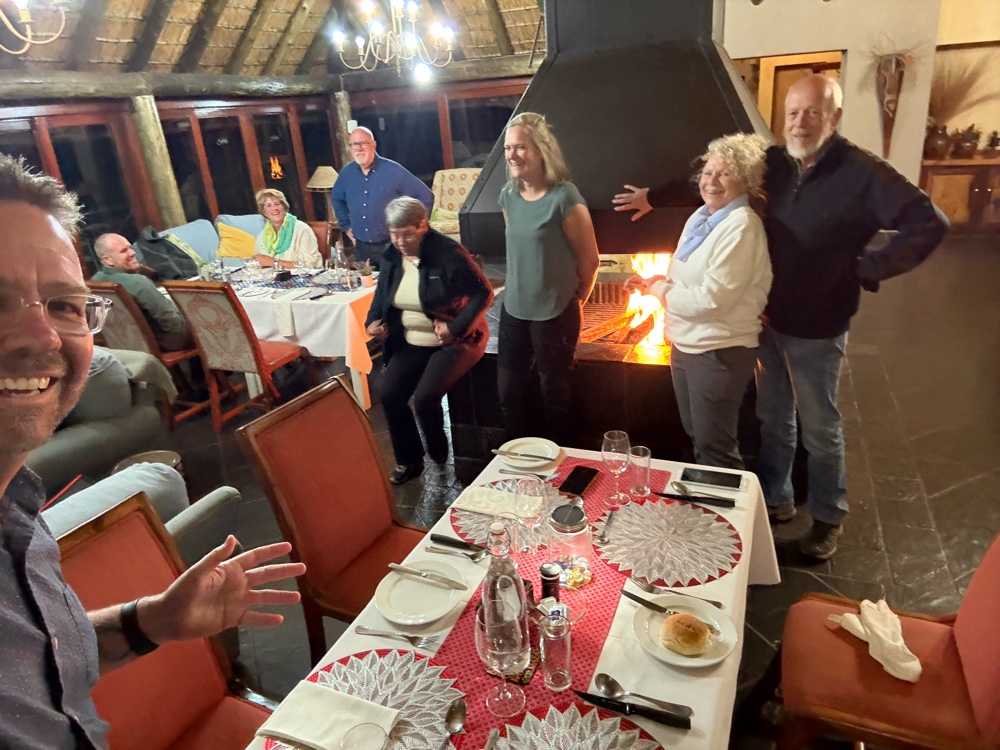
| The main lodge sitting area. |
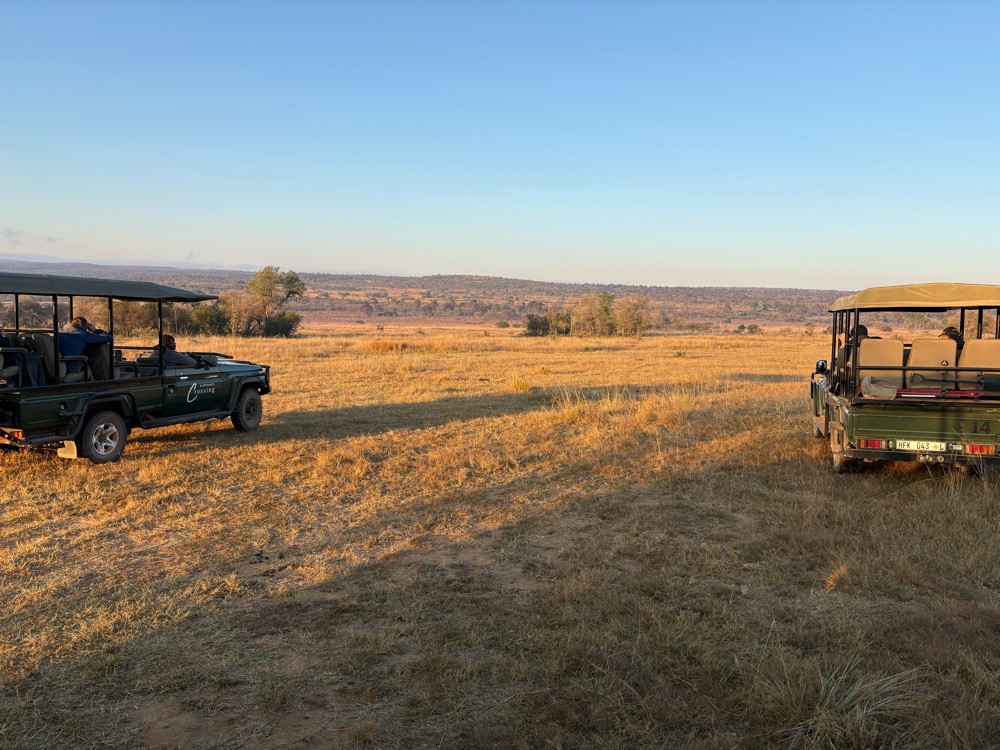
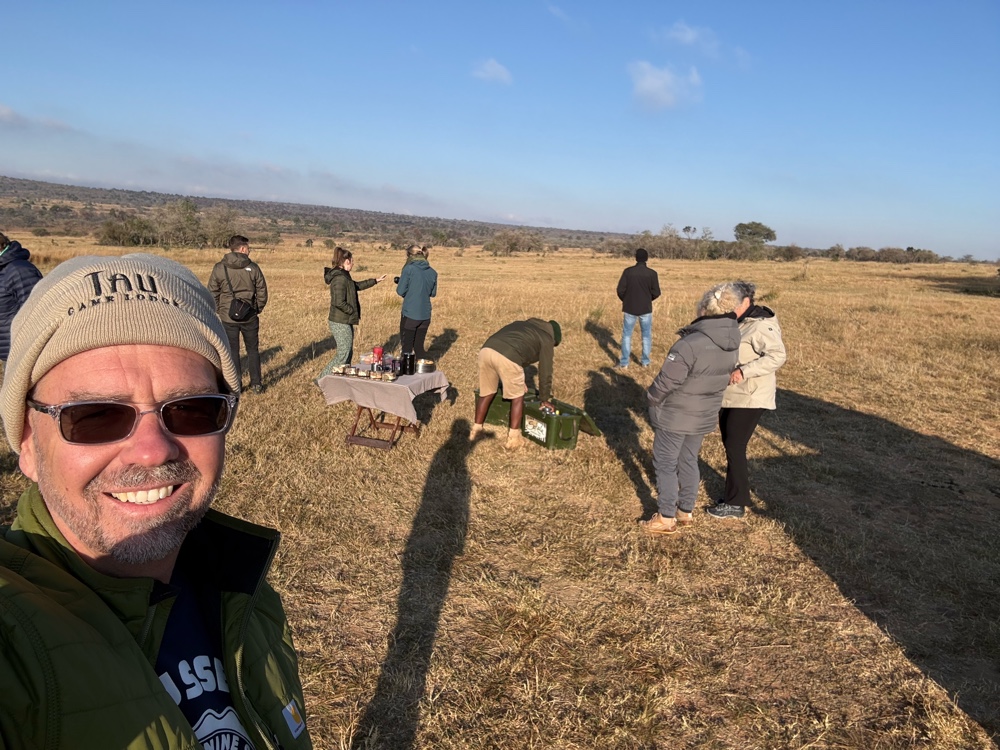
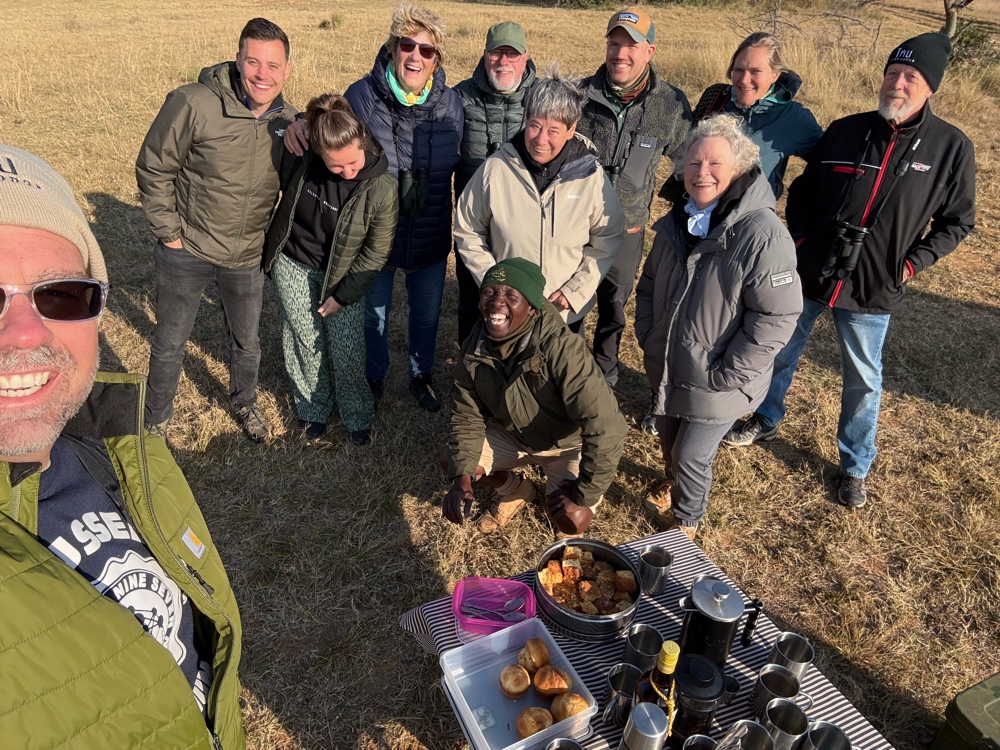
This morning we headed out on our first game drive at 6:30. We didn’t encounter as many animals right away as we had at the previous reserve, but we did catch a distant sighting of an adult male lion lying down and resting. We also saw some warthogs, rhino, and impala. And of course we had the requisite coffee break toward the end of the drive.
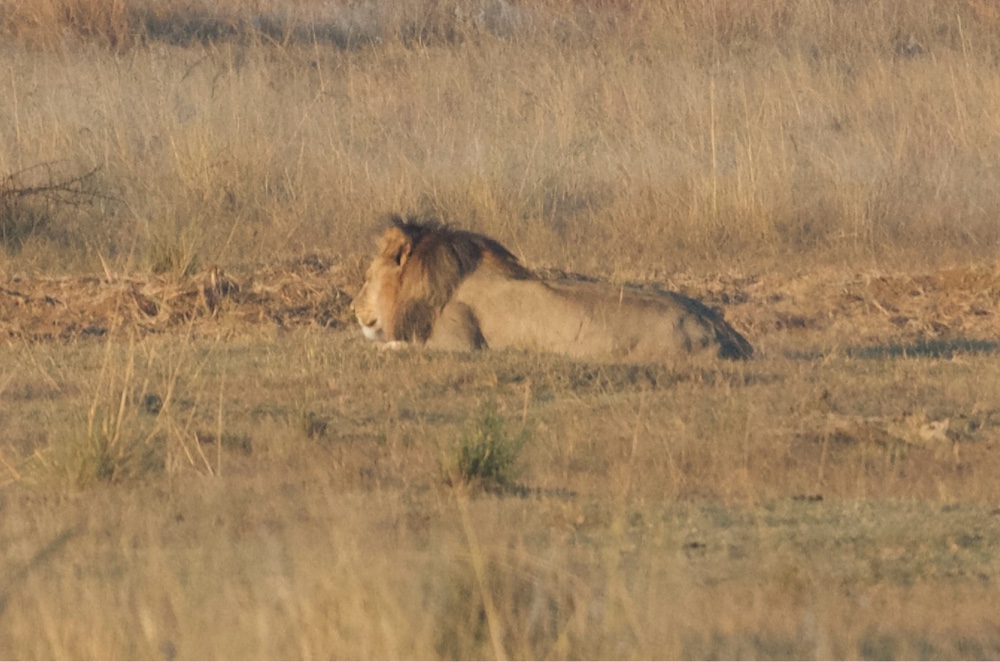 |
| I’m gonna guess he was about 150-200 yards from us. |
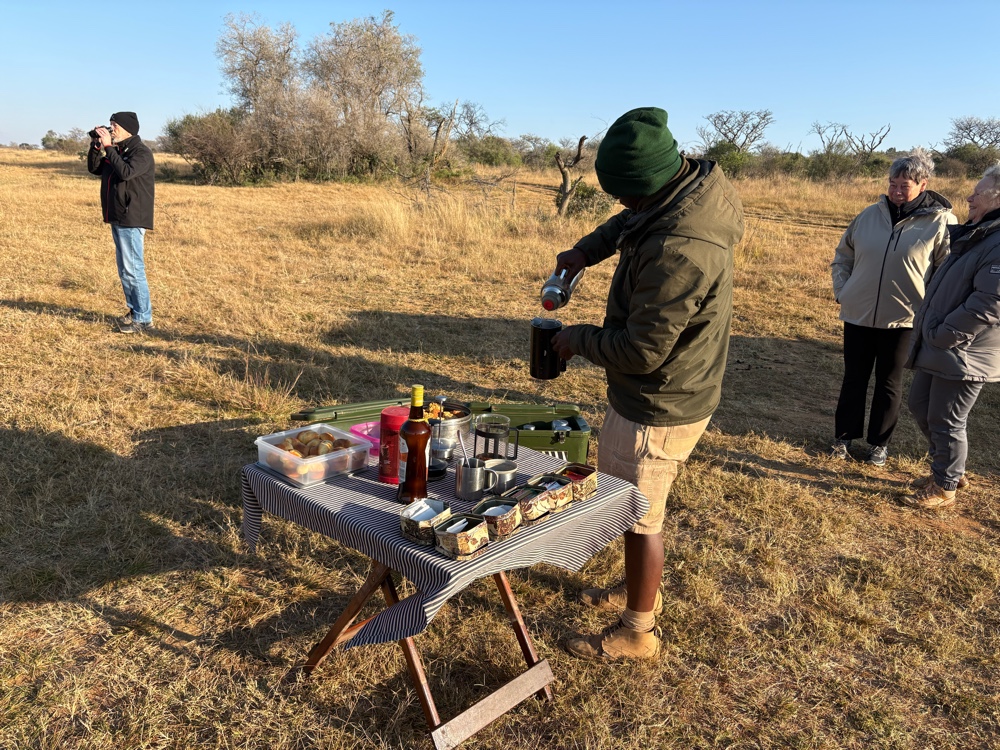 |
| Patrick, our guide, setting up coffee. |
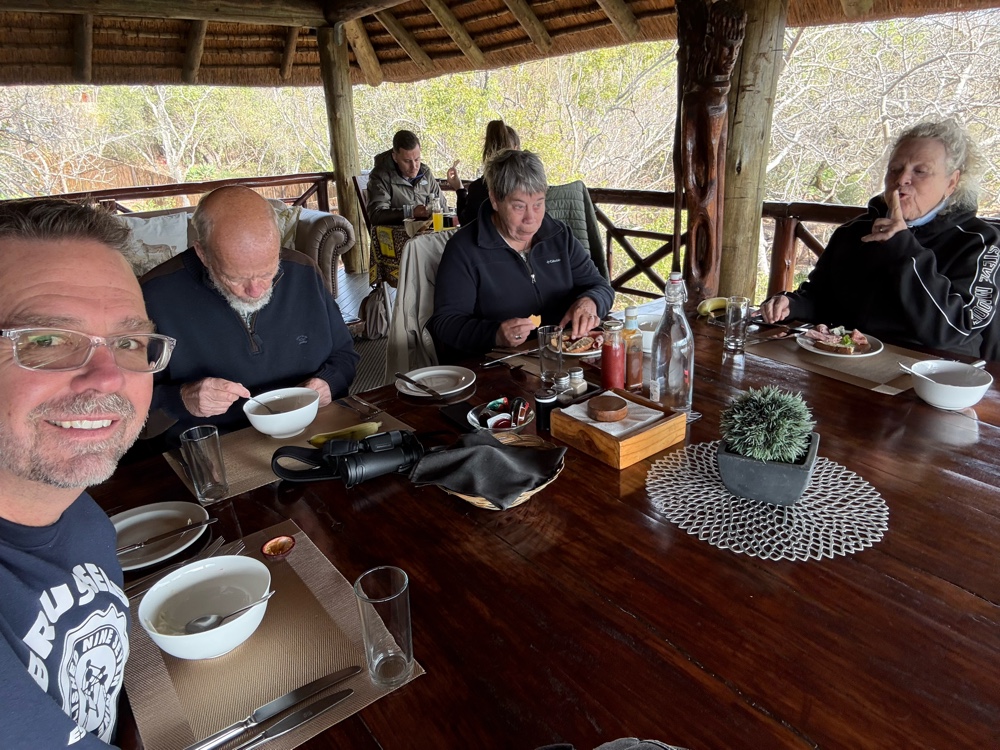
Afterward we had breakfast, then went back to get cleaned up and rest for a few hours.
If anyone is wondering, I didn’t plan any of this. Liesbeth and Jos put together everything. Jos and her husband live here in South Africa and Liesbeth has visited several times before. They know exactly what they’re doing. And if anyone is thinking that they would like to do something like this, please let me know. I could definitely organize a trip now that I’ve experienced it once myself.
We had a late, light lunch before our afternoon drive. I will reiterate it’s the beginning of winter here. The nights are chilly, but the days have been sunny and nice.
We had a nice drive this evening. Several babies. I’ll do a photo dump — too many to put in the blog.
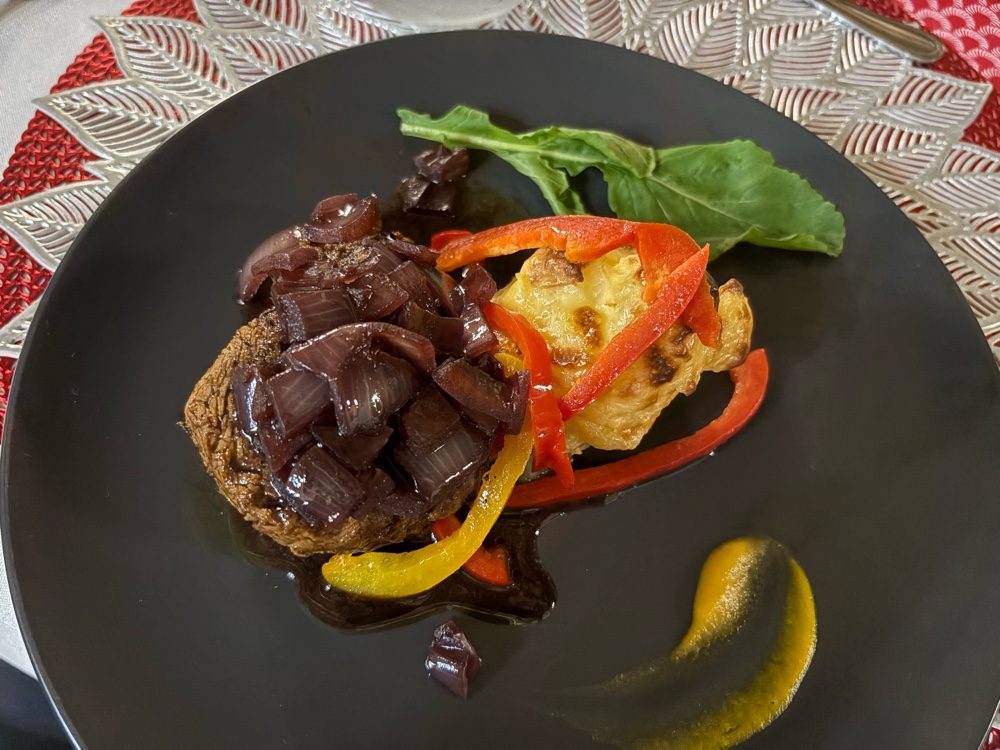
Dinner was great!
Educational Note:
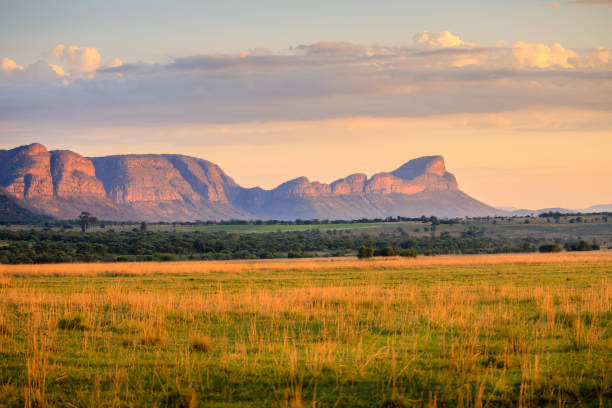 |
Photo credit:
|
We are near the Waterberg, which is an ancient sedimentary mountain range. The Waterberg’s geology is genuinely ancient — among the oldest landscapes you’ll ever stand on. Here’s the story in stages:
The foundation (about 2.7 billion years ago). The whole region sits on the Kaapvaal craton, one of Earth’s oldest surviving pieces of continental crust. This underlying rock formed as a precursor island roughly 2.7 billion years ago  and became the stable basement on which everything later was built.
The sandstone layers (about 1.7–2 billion years ago). The mountains themselves are made of the Waterberg Group sandstones. The red Waterberg sandstones are estimated to be between 1.9 and 1.7 billion years old . These were laid down as sediment — sand, gravel, and silt — washed into a vast basin by ancient rivers. The detritus was eroded from the Limpopo Belt, a mountain-building event involving the collision of the Kaapvaal and Zimbabwe cratons . So in effect, an even older mountain range to the north was worn down, and its debris became the raw material for the Waterberg.


Comments
Post a Comment