Today was my last full day in South Africa before my flight to my next stop tomorrow morning, and I wanted to spend it the way I started this whole adventure — with Achim. He’s the same guide who took me sightseeing the day after I arrived two weeks ago, and there was something fitting about bookending the trip with the same steady hands behind the wheel — they drive in the left here. He picked me up around 8:30 this morning, and we set off into Johannesburg with a full day ahead of us: museums, memorials, a proper South African lunch, and a slow drive through a city that doesn’t hide its past.
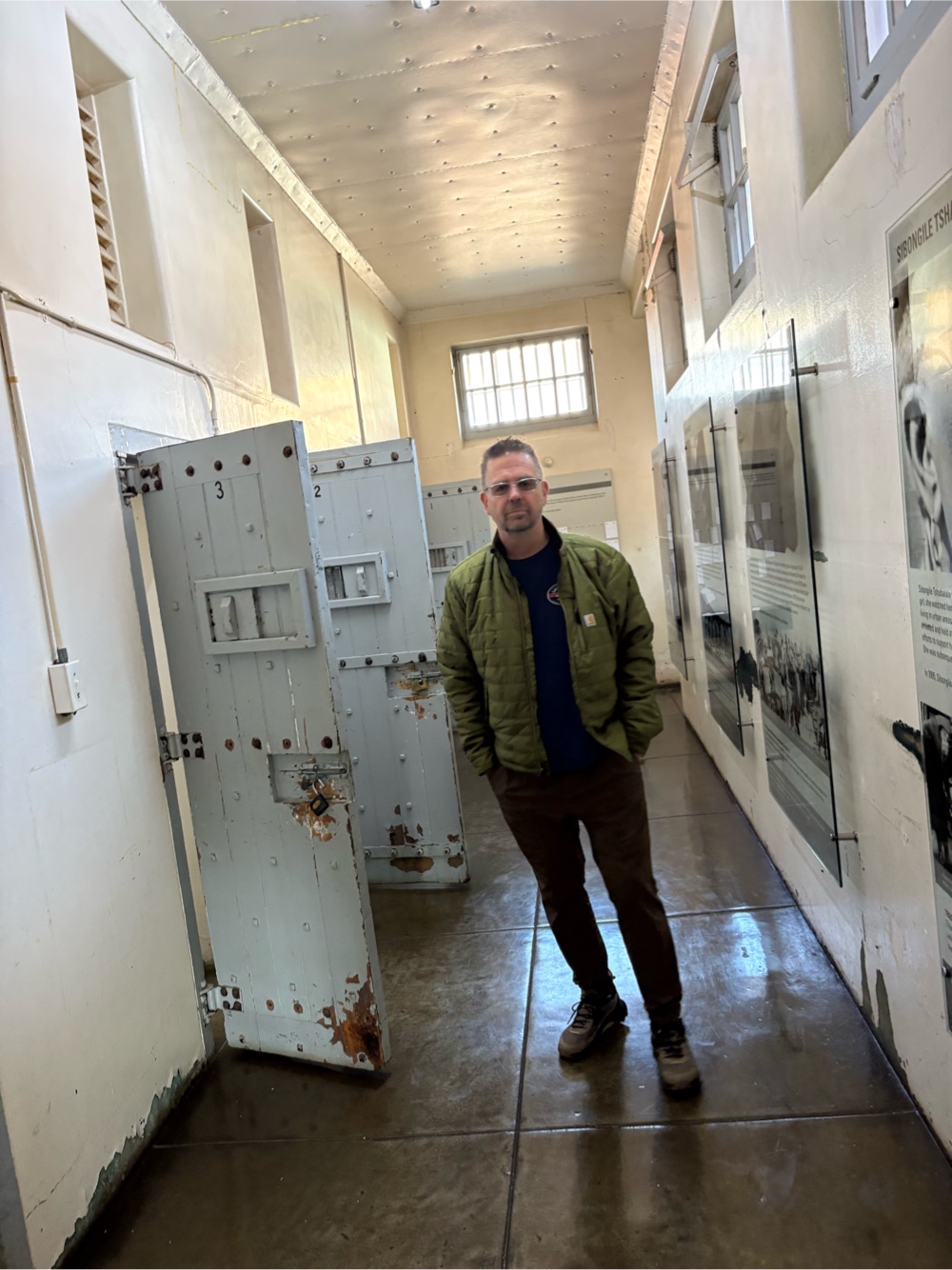
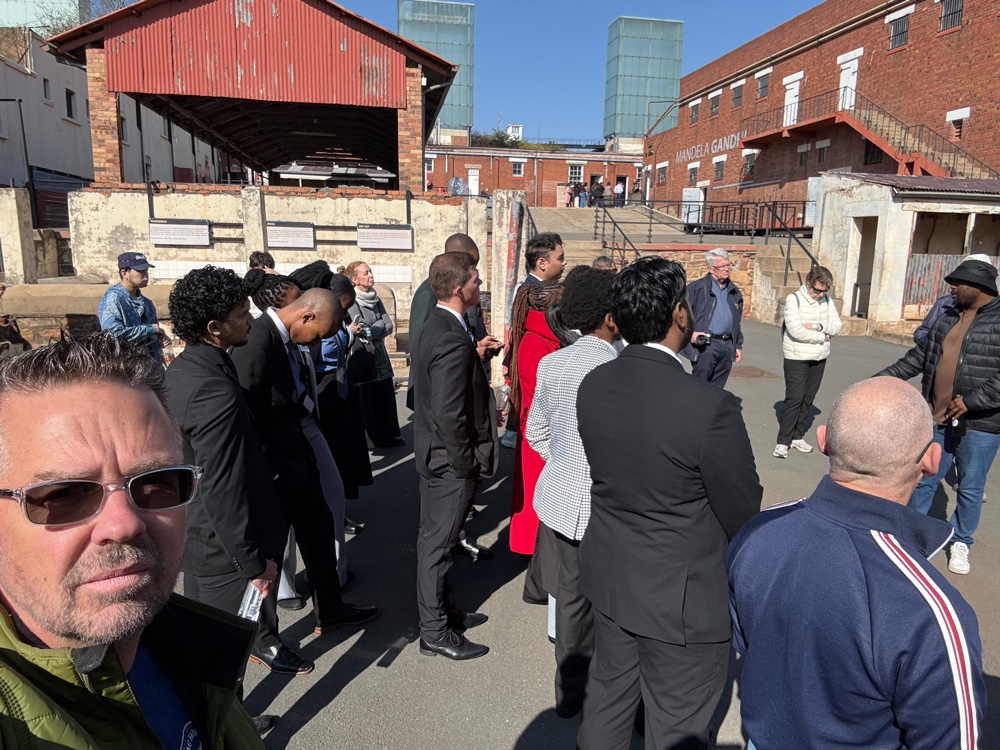
Our first stop was Constitution Hill, and I’m still turning it over in my mind. The site sits on a ridge overlooking downtown Joburg (no one says Johannesburg here) and it carries a strange double meaning. For most of the last century, this was a prison — the Old Fort, built by Paul Kruger in the late 1890s to keep the British out, later turned into a jail that held everyone from petty offenders to the country’s most important political prisoners. Both Mahatma Gandhi and Nelson Mandela did time here. Mandela was here while awaiting trial before being sent to Robin Island. The section known as Number Four, where black male prisoners were kept in brutal, overcrowded conditions, is hard to walk through. So is the Women’s Gaol. You feel the cold of the place even on a sunny morning.
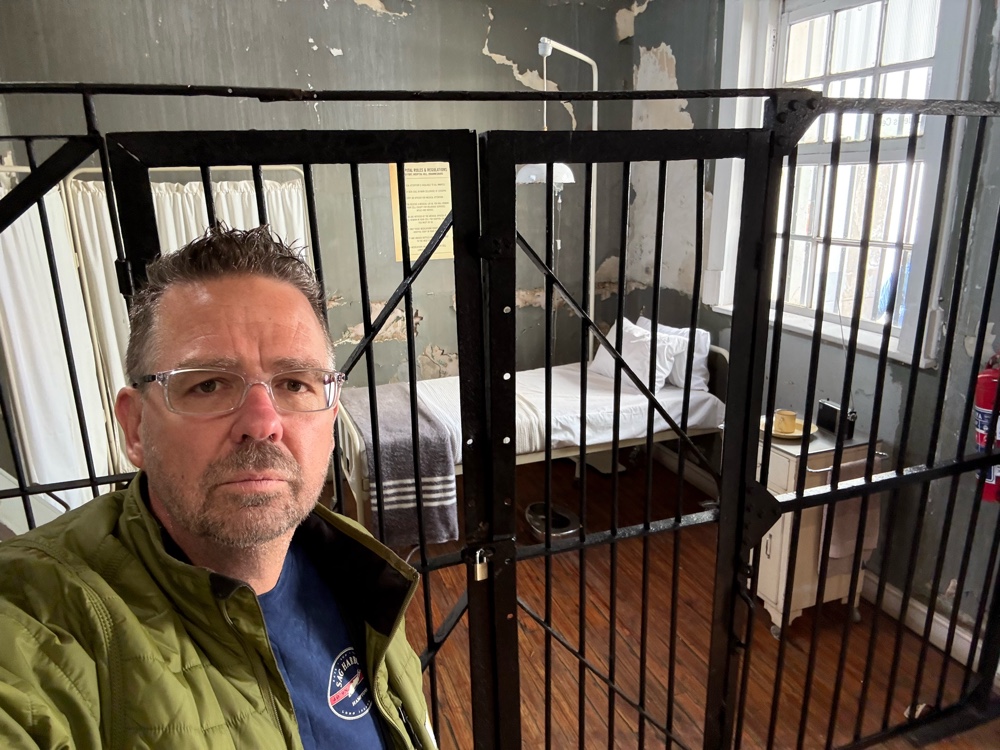 |
| Mandela‘s specially made cell. They kept him away from other prisoners as to not let him influence them. |
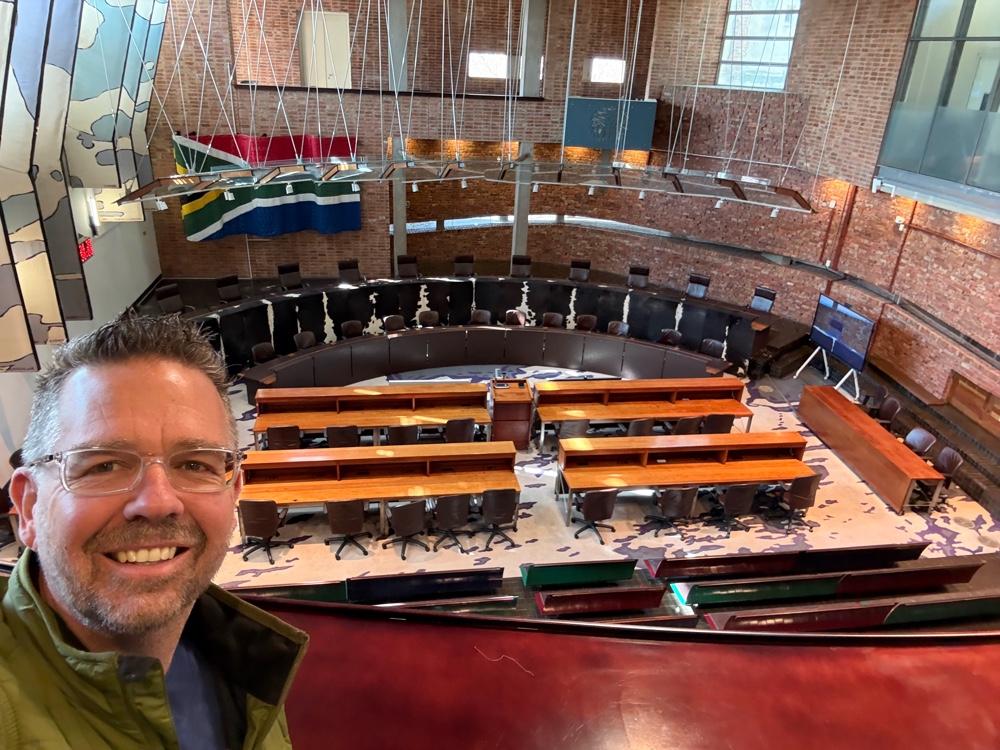
And then, right there on the same ground, stands South Africa’s Constitutional Court — the highest court in the land, opened in 2004 and built partly from the bricks of the demolished prison blocks. I keep coming back to that detail. They took the bricks of the old prison and laid them into the walls of the new court. The whole site is a deliberate statement: out of the worst of the past, they chose to build the institution meant to protect everyone’s rights. It became a UNESCO World Heritage Site a couple of years back, and standing in that light-filled courtroom after walking through those cells, I understood why.
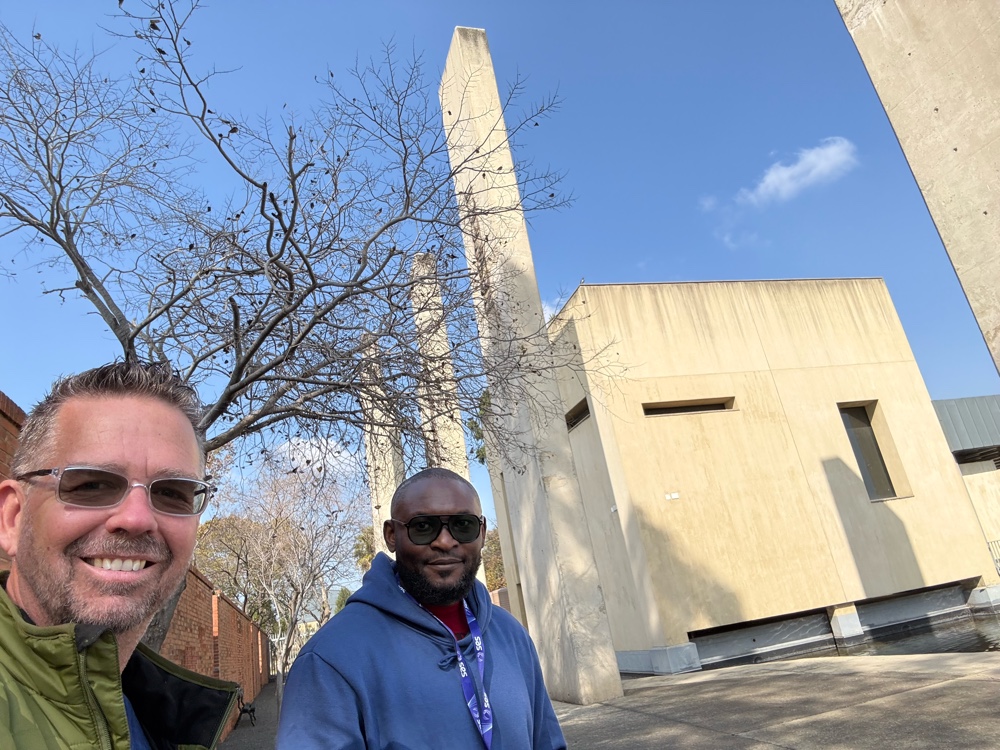
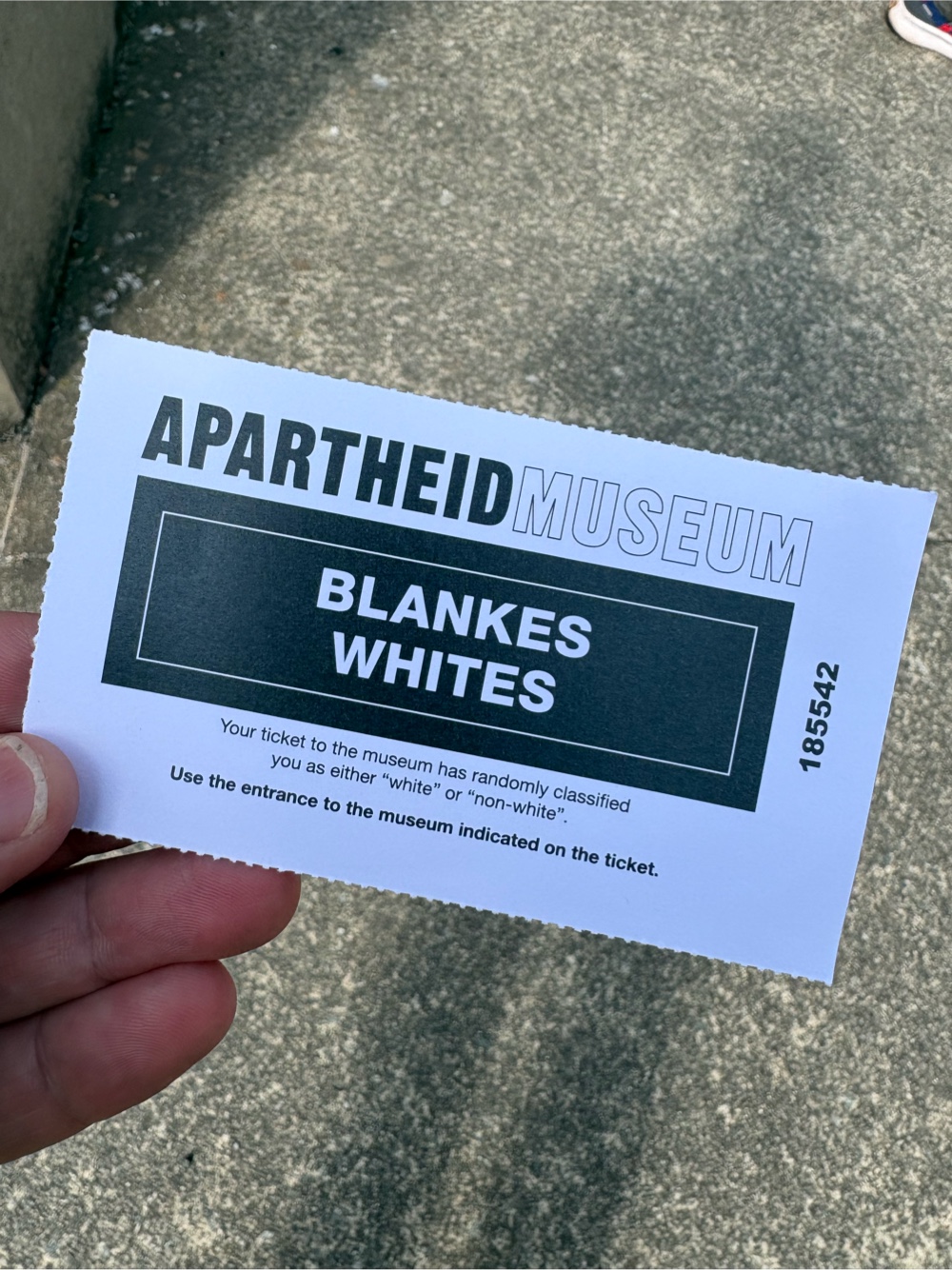
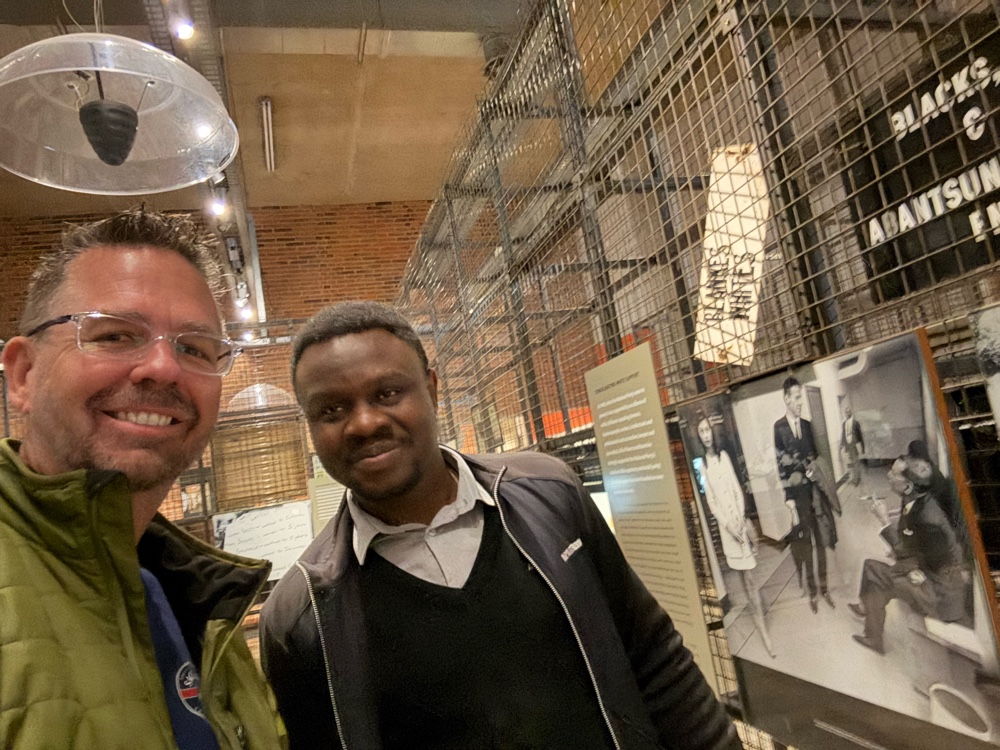
From there we drove to the Apartheid Museum, out near Gold Reef City. I’d heard about this place for years, and it lived up to everything. It opened in 2001, and it doesn’t ease you in gently. When you buy your ticket, you’re randomly assigned a racial classification — “white” or “non-white” — and you enter through a separate gate depending on which one you got. Right from the doorway, you’re made to feel the arbitrary cruelty of the whole system. That stayed with me.
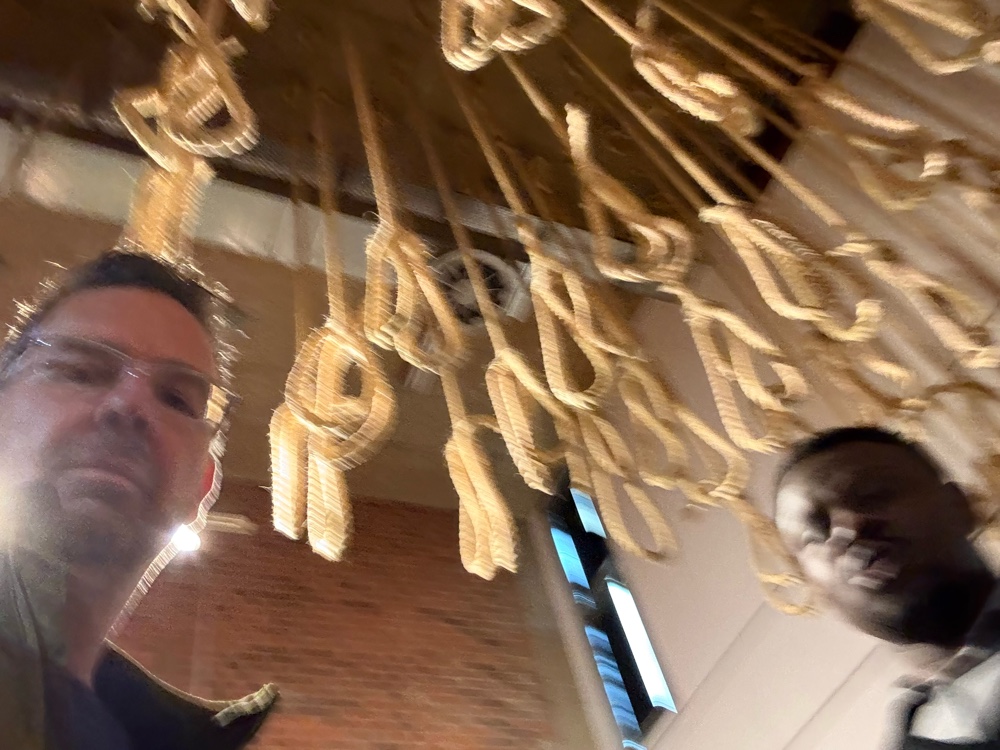
Inside, the story of apartheid unfolds across more than twenty exhibition areas — photographs, film, newspaper clippings, personal artifacts, the works. It traces the rise of the system from 1948 and its long, hard fall through to the democratic elections of 1994. There’s a room I won’t forget: a small chamber hung with 131 nooses, one for each government opponent executed under the so-called antiterrorism laws. The Mandela exhibition near the end is the emotional heart of it. I gave it a couple of hours and could have used more. It’s a lot to absorb, but it’s the kind of heavy that feels important to carry.
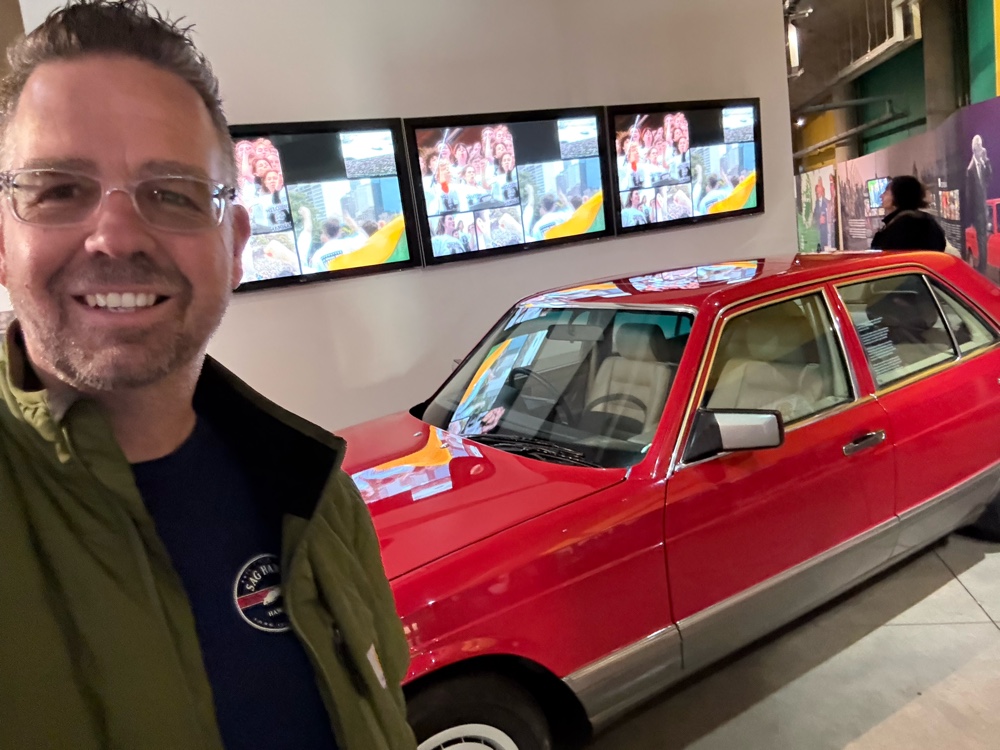 |
| This Mercedes-Benz was specially built by workers on their own time at the Mercedes-Benz plant in South Africa for Nelson Mandela when he was released from prison. |
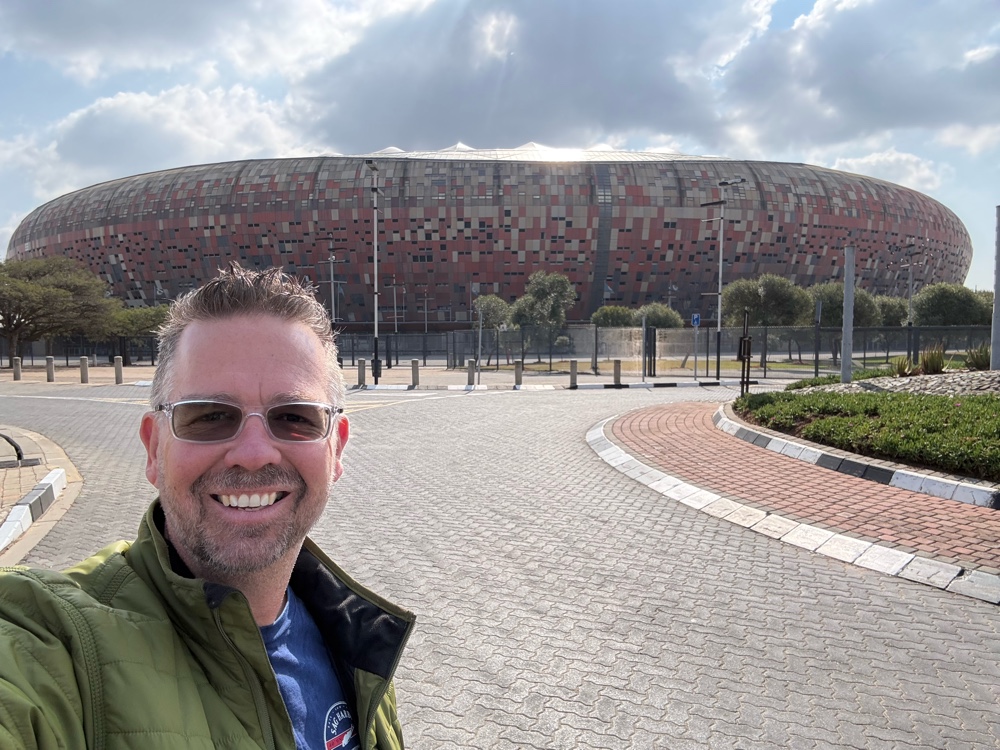
On the way toward Soweto we passed FNB Stadium — “Soccer City,” the big calabash-shaped bowl that hosted the 2010 World Cup final. But for me its real significance is the history. This is where Nelson Mandela gave his first major speech to the people after walking free in 1990, and it’s where the nation gathered to say goodbye to him at his memorial in 2013. Even just driving past, you feel the gravity of the place.
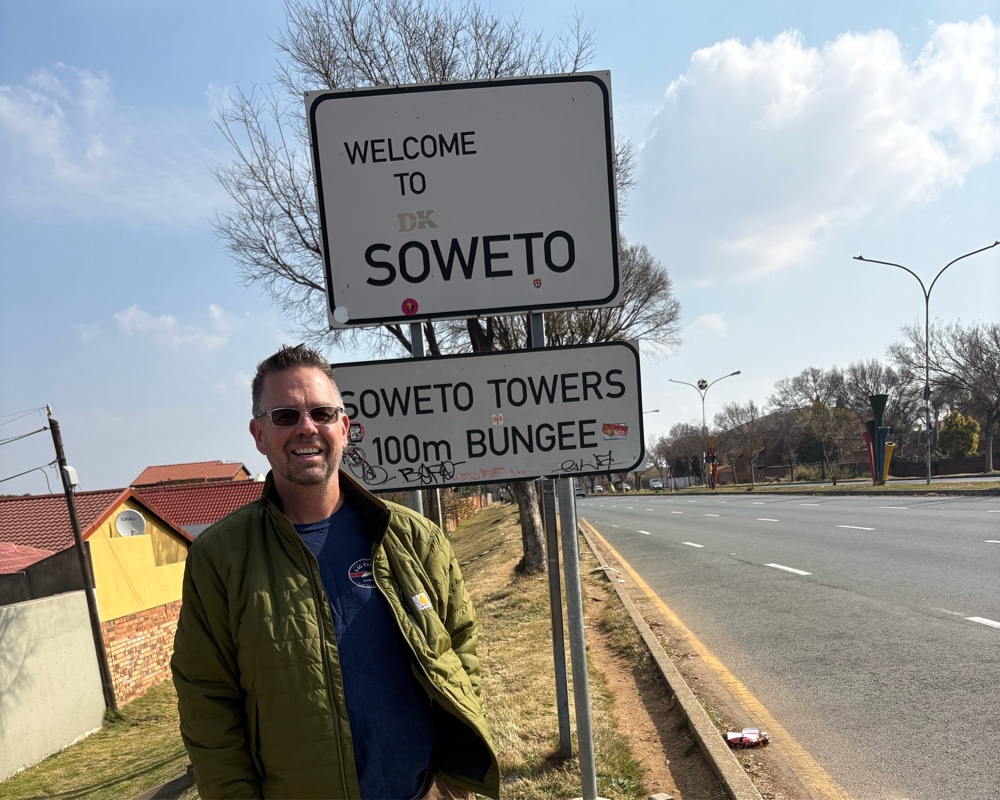
By then I’d earned a meal, and Achim took me to Vilakazi Street in Soweto for lunch. This street is something special — it’s said to be the only street in the world that’s been home to two Nobel Peace Prize winners: Nelson Mandela and Archbishop Desmond Tutu both lived here.
I don’t want to brag too much but I’ve also visited the neighborhood where a FIFA Peace Prize winner lived — 😆
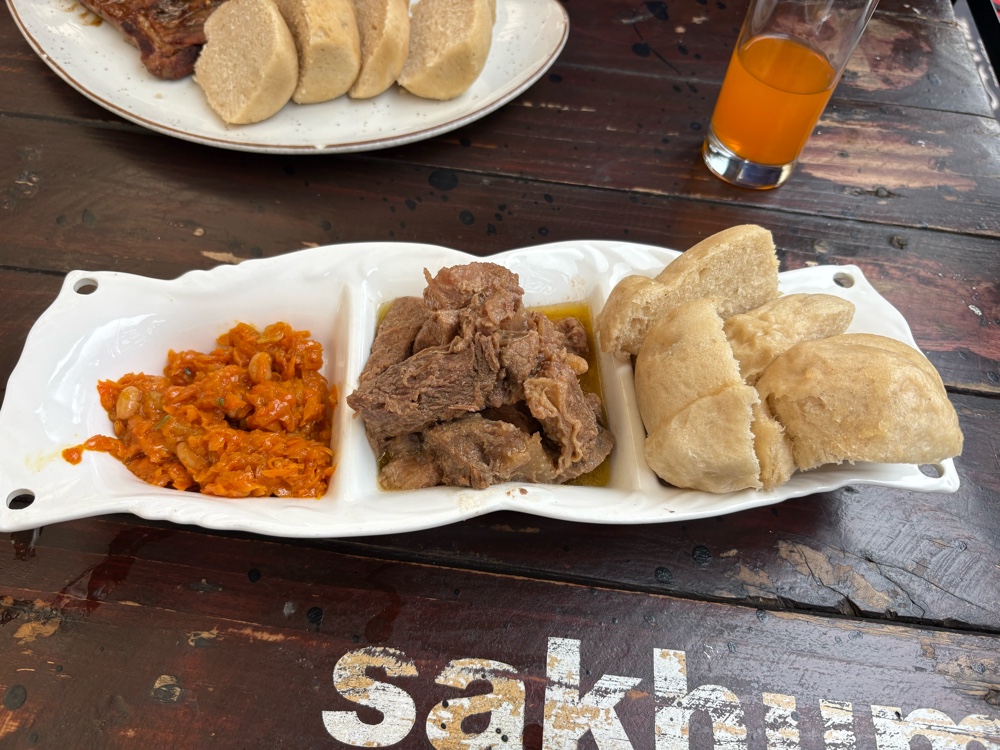
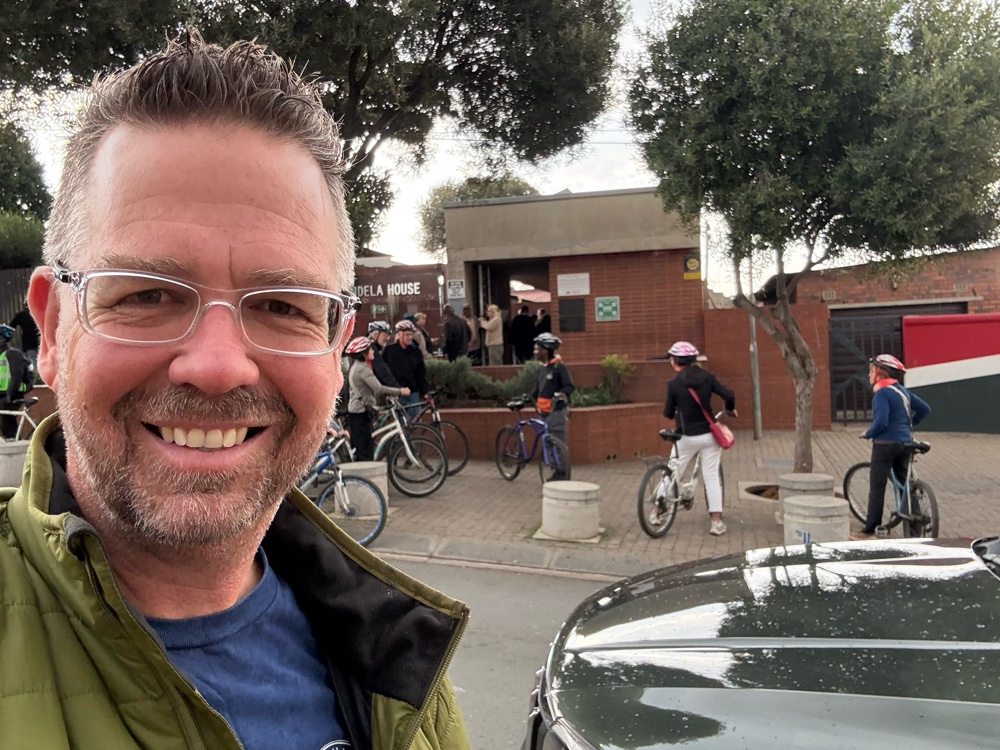
Mandela’s old red-brick house still stands, bullet holes and scorch marks and all. The street today is alive with music, street vendors, dancers, and restaurants, and I had a plate of traditional South African food that hit the spot after a heavy morning. There’s a real warmth to the place — history and everyday life sharing the same sidewalk.
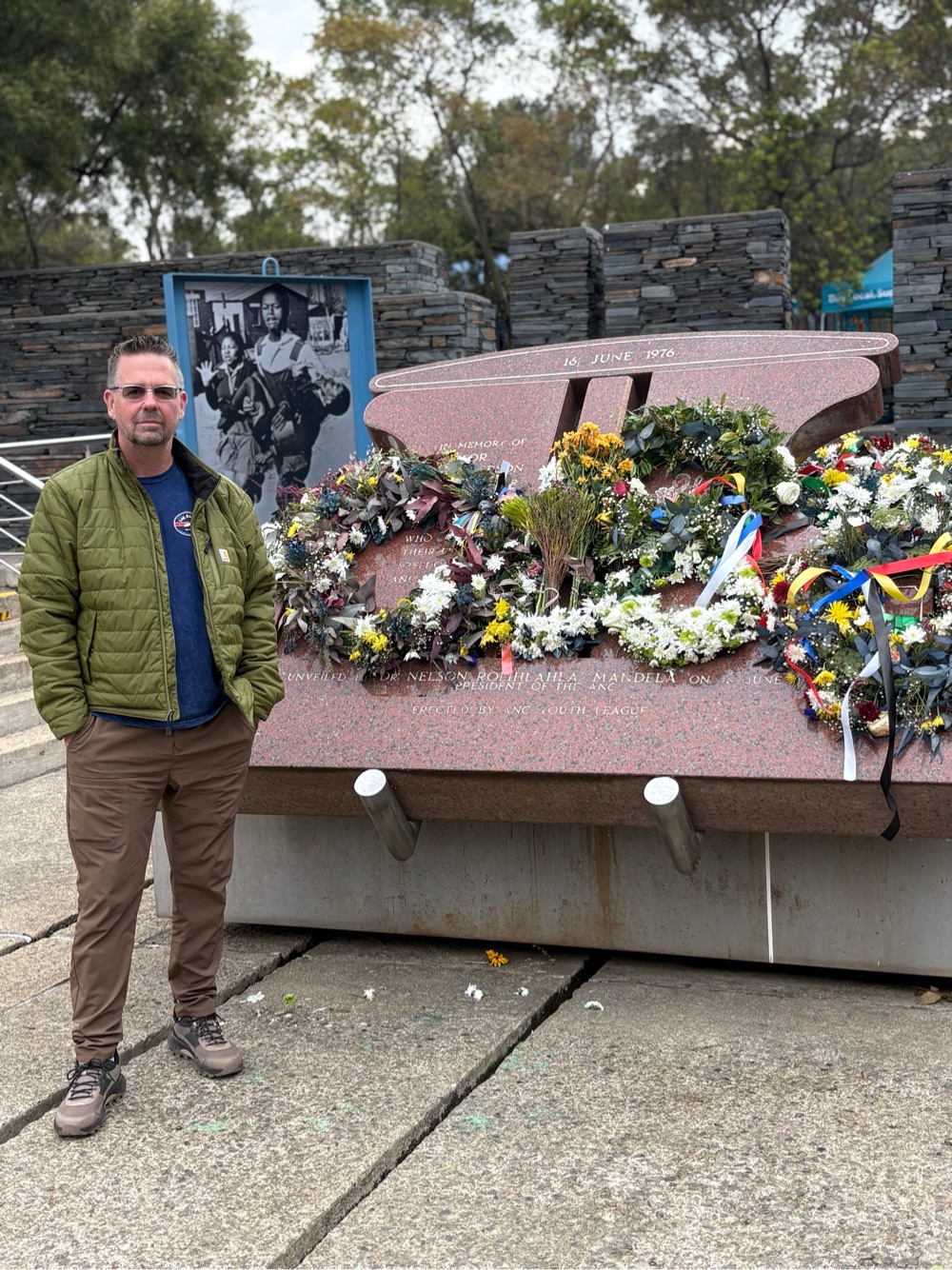
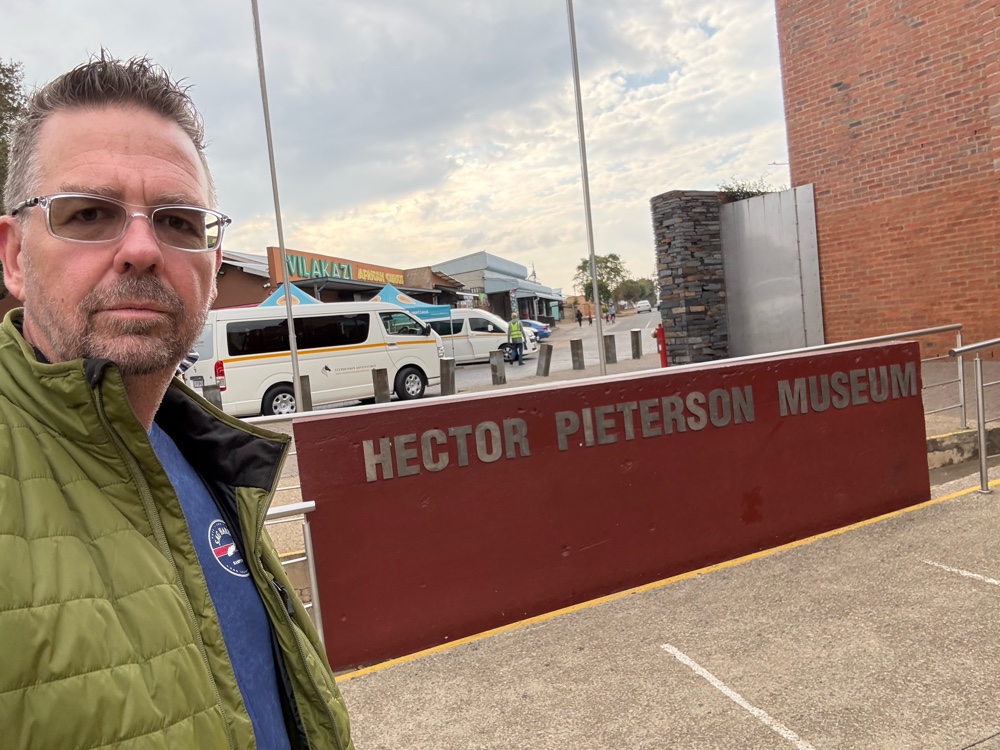
Just around the corner from the lunch buzz is the Hector Pieterson Memorial, and the mood shifts the moment you arrive. Hector Pieterson was a twelve-year-old boy shot by police on June 16, 1976, when schoolchildren marched in protest against being forced to learn in Afrikaans. The photograph of him being carried, mortally wounded, by another student while his sister ran alongside, went around the world and became one of the defining images of the struggle against apartheid. The memorial sits near the spot where he fell, and the museum next door tells the story of that day and the uprising it sparked. June 16 is now National Youth Day in South Africa. Standing there, doing the math on how young those kids were, was sobering in a way I felt all the way down.
A Drive Through Downtown Joburg
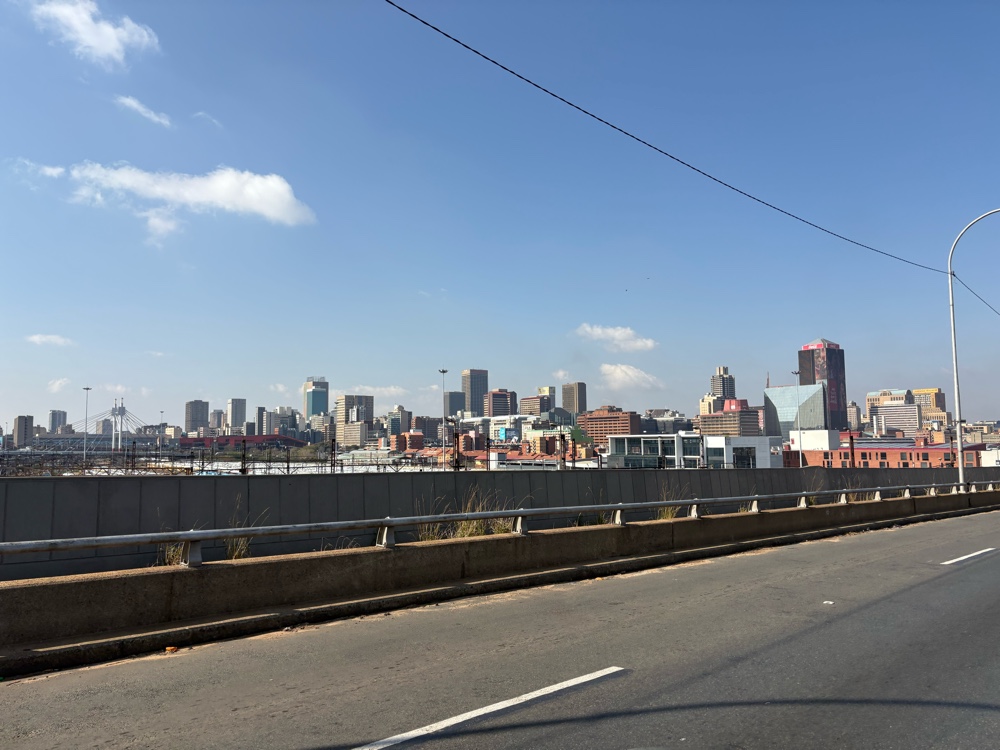
We finished the day with a slow drive through downtown Johannesburg — the bustle, the contrasts, the sheer energy of a city that has lived through so much and keeps moving forward. After everything I’d seen this morning, watching ordinary life roll by through the windshield felt like the right way to end it.
Tomorrow I fly a couple hours north for a few days to end my trip. Two weeks ago I landed here knowing this country mostly through headlines and history books. Today I leave having walked through its prisons and its courtrooms, stood where children died for the right to learn in their own language, and eaten lunch on a street where two of the great moral figures of the last century once lived as neighbors. South Africa doesn’t bury its past — it puts it right in front of you and asks you to look. I’m grateful I did.
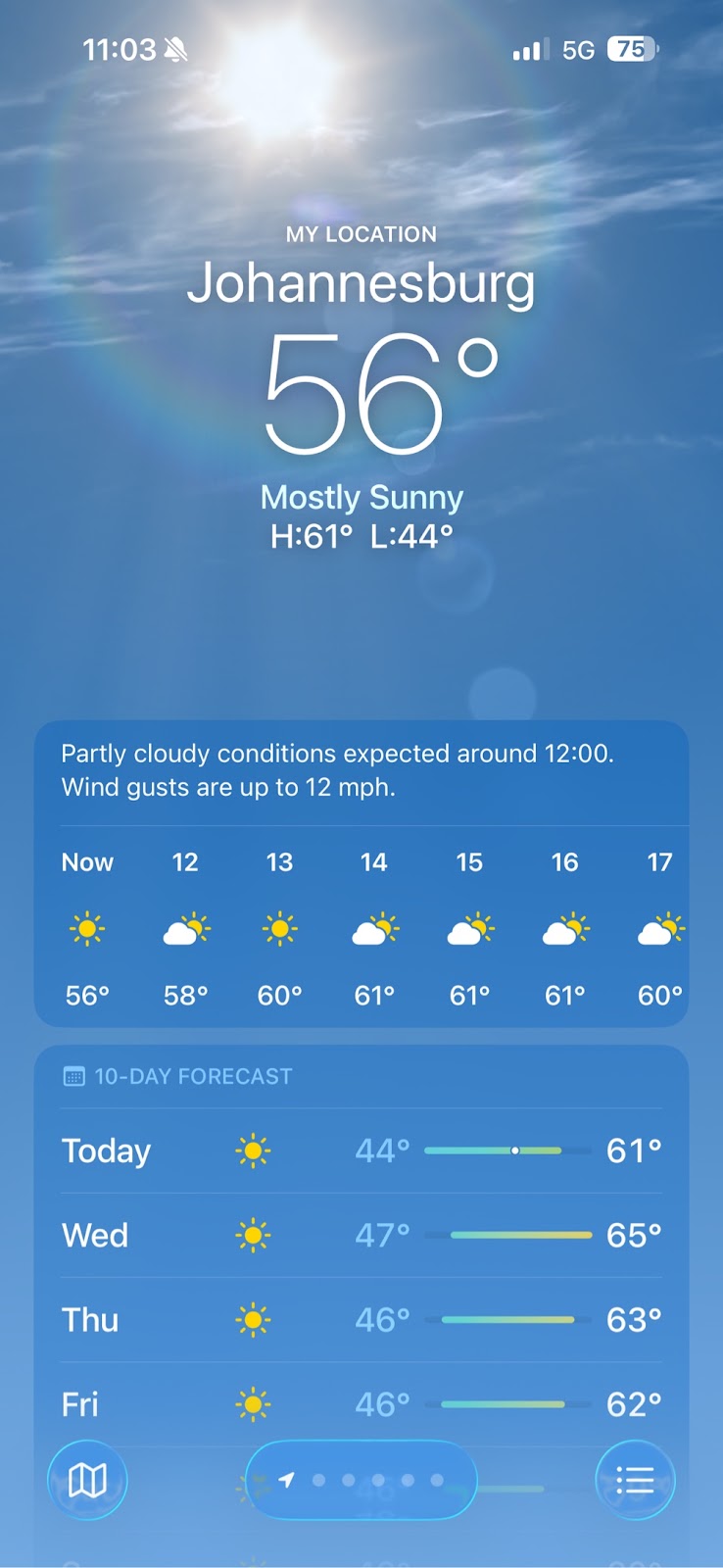
Just for reference, it was a beautiful, sunny early winter day.

Comments
Post a Comment